

Choosing a protective system for a roller or track isn’t just a matter of material or environmental resistance. It’s also a matter of space. And in many projects, available space ends up being the deciding factor between two technically sound solutions: roller blinds and folding bellows.
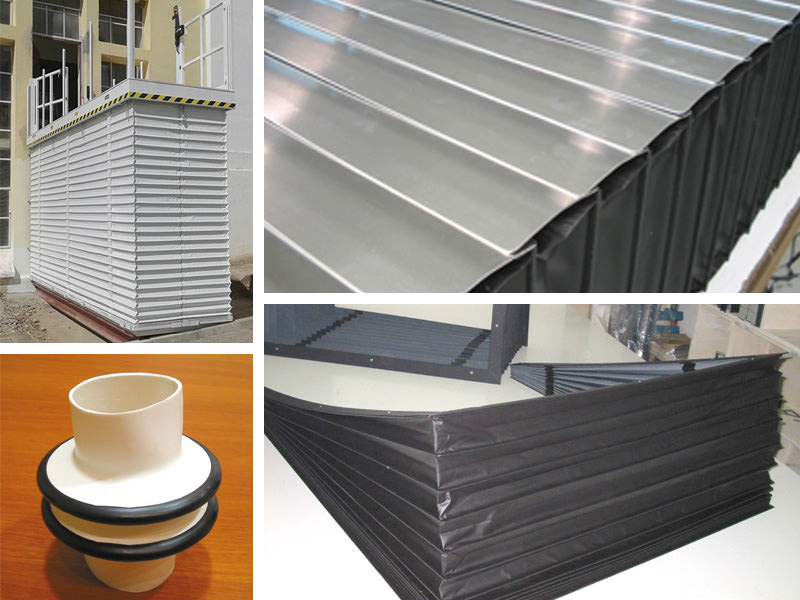
Two different ways to solve the same problem
Both systems serve the same function: protecting a sliding surface or moving component from chips, coolant, dust, or other external agents. The difference lies in how they manage the travel distance.
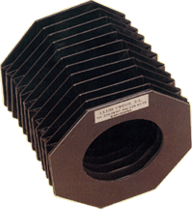
The folding bellows compresses itself like an accordion, occupying only a fraction of the total travel distance in its closed position. Its geometry is fixed: each fold has a specific height, and the number of folds defines the maximum extended length.
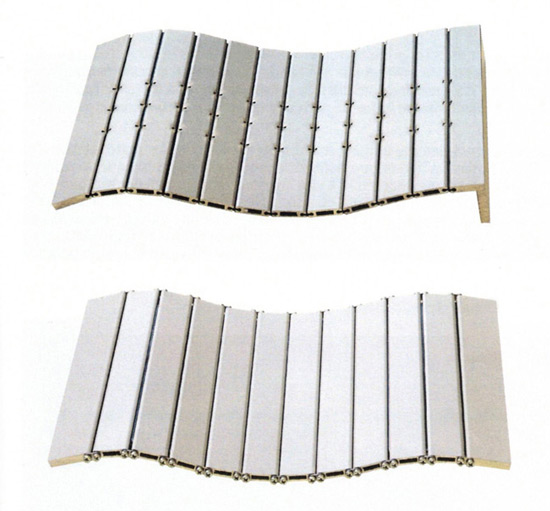
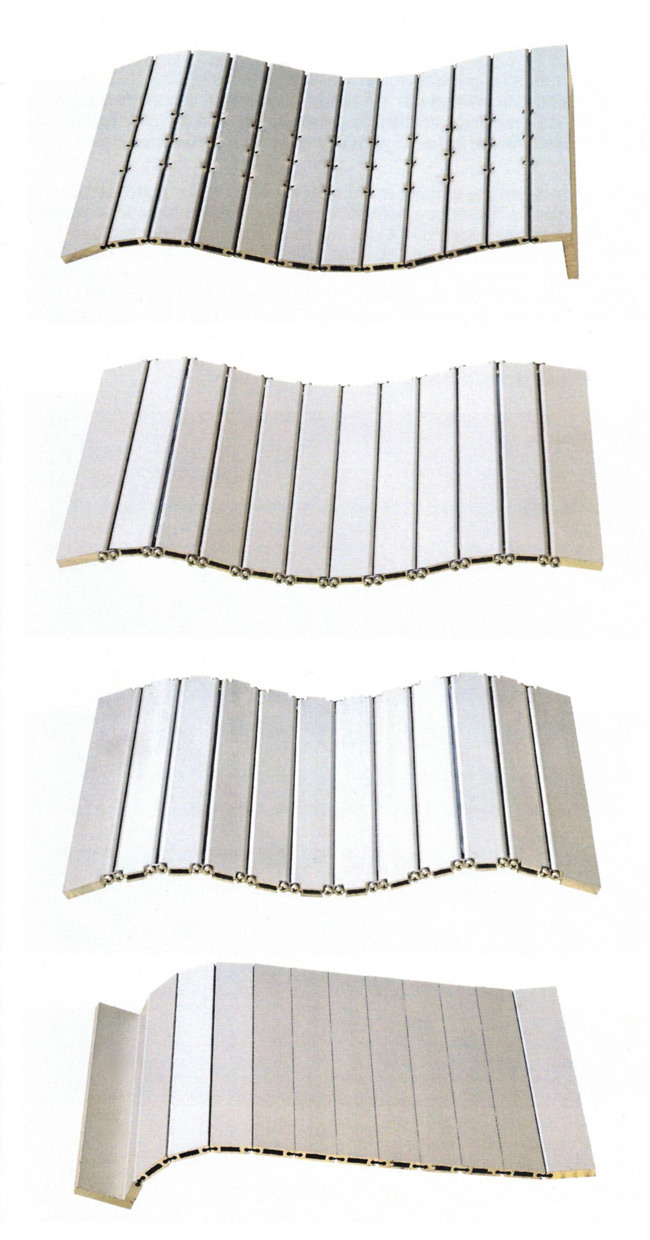
The rolling curtain winds onto a motorized or spring-driven shaft or drum, releasing or retracting material depending on its movement. It doesn’t have folds, but rather a continuous sheet that accumulates on a compact cylinder.
When to choose a folding bellows
- Limited lateral space, but moderate travel: the bellows doesn’t need additional housing at the ends; it simply compresses to its own folded length.
- Environments with a high load of coarse chips: the folded design better distributes the impact of large particles across the entire surface.
- Installations without the need for motorization: it’s a passive system, moving with the carriage without additional mechanisms.
- Simple maintenance: replacement doesn’t require disassembling winding shafts or tensioning systems.
The bellows’ weak point appears when the travel is very long. The longer the travel, the greater the accumulated folded length, and this can generate considerable volume in the maximum compression position.
When to choose a roller blind
- Long runs with limited space at one end: the entire slat is concentrated on a compact drum, freeing up space along the rest of the run
● Machines with vertical axes or orientations where the weight of the folded bellows would be a problem: the winding system, spring-loaded or motorized, compensates for the slat’s own weight
● Applications where a taut, flat surface is required: the blind, when unfolded, maintains flatness better than a bellows with visible folds
● Environments where controlled opening and closing speed is needed: motorized systems allow synchronization of the movement with the machine cycleThe blind’s weak point lies in the winding drum itself: it requires dedicated housing, and in some designs, maintenance of the tensioning mechanism or the motor.
Comparative table according to available space
| Folding factor | Bellows | Roller blind |
| Lateral space | Requires compression zone within the travel path | Requires housing at one end (drum) |
| Long travel | Increasing folded volume | Compact regardless of travel path |
| Weight on vertical axes | May generate tension due to its own weight | Spring or motor compensates for the weight |
| Maintenance | Direct replacement, without mechanisms | Requires drum and tension check |
| Resistance to coarse chips | Good distribution per fold | Depends on the sheet material |
The question to ask before specifying
Before deciding between one system or the other, it’s advisable to answer three specific questions:
1. What is the actual shaft stroke, and how much clearance is left at each end of that stroke?
2. Is the shaft oriented horizontally or vertically, and what self-weight will the protective system have to support?
3. Does the environment generate coarse particles that could damage a thin sheet, or is fine dust predominant, where a taut surface provides better protection?
Neither solution is superior in absolute terms. They are two different responses to the same need, and the one that works depends on the actual space available on each machine, not on a generic catalog preference.
Conclusion
The choice between a roll-up curtain and a folding bellows shouldn’t be based on habit or what has already been used on other machines in the plant. It should be decided by measuring the stroke, the available space, and the shaft orientation. A specification that is well-suited to the actual space prevents both oversizing the protective system and undersizing the stroke the machine requires.