

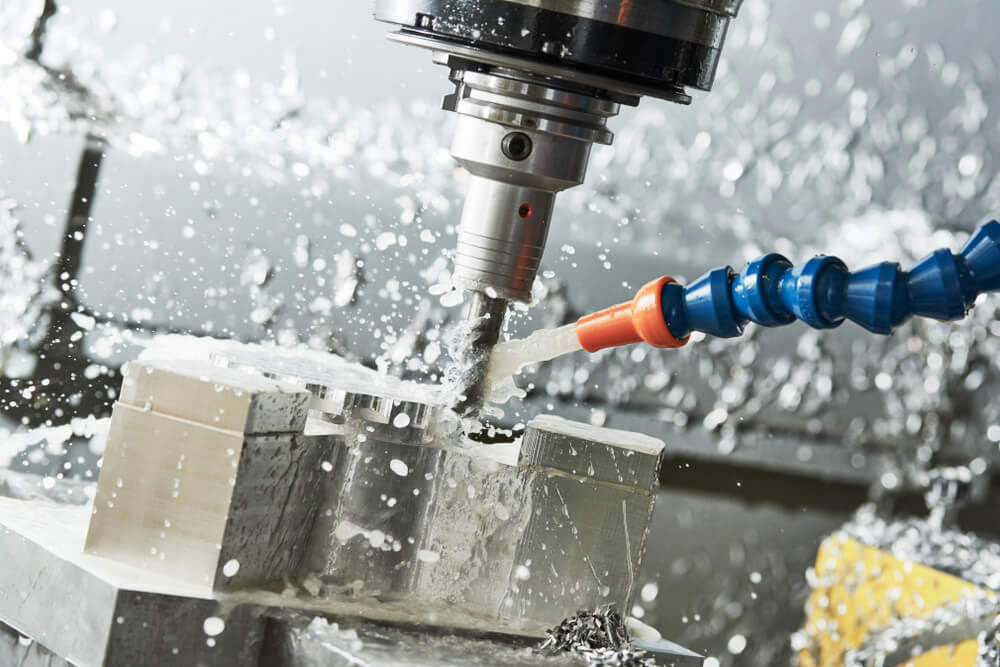
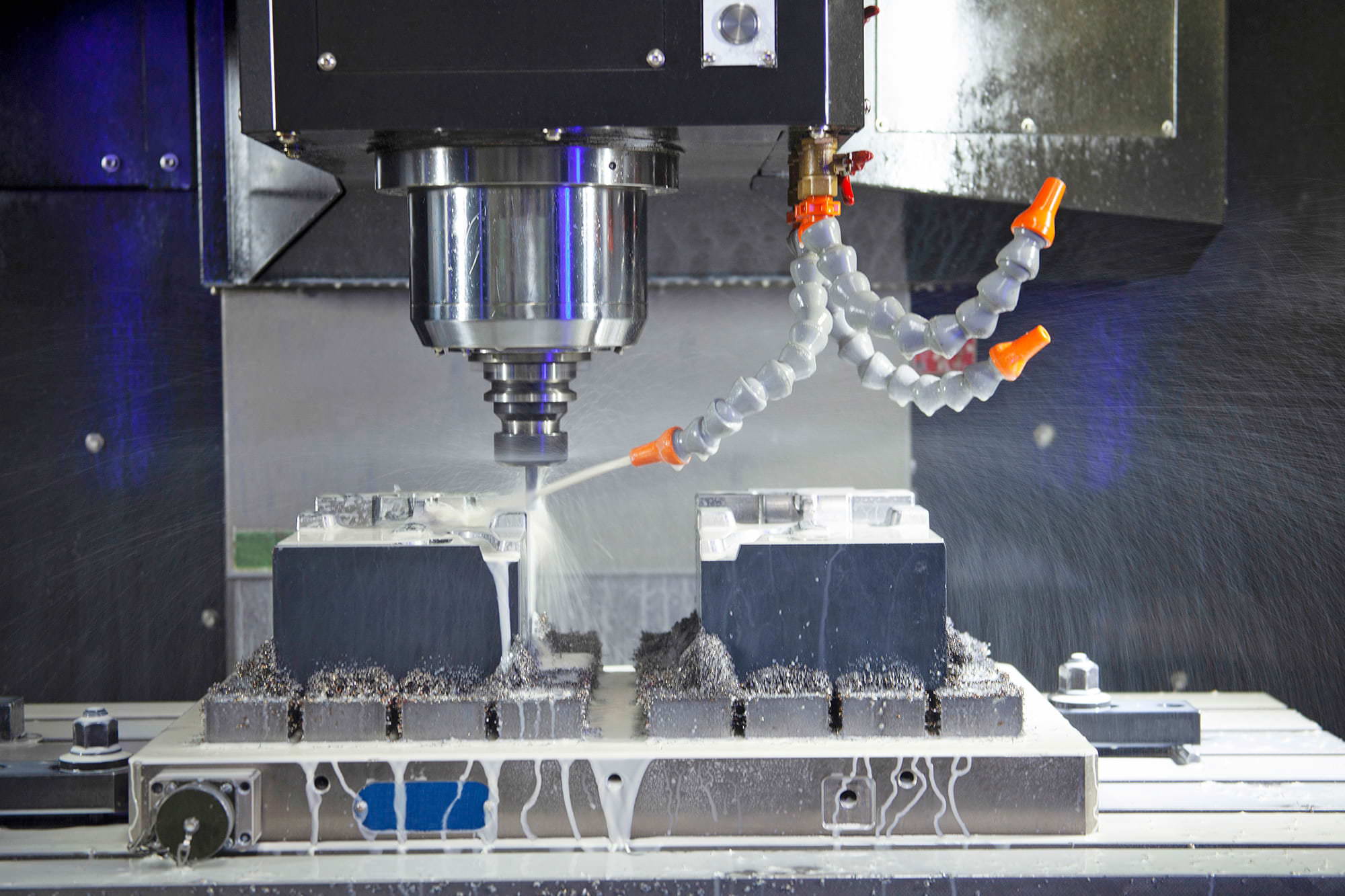
The use of coolants and cutting fluids is essential for reducing temperature and lubricating the cutting zone in CNC machining. However, these fluids are among the most aggressive agents for machine protection systems. Continuous exposure to coolant degrades the structure of protective bellows, attacks their seams, and carries along fine metal particles that accelerate abrasive wear.
Integrating a protective bellows with the appropriate chemical composition and structural design is crucial for shielding linear guides, bearings, and ball screws from the ingress of liquid contaminants.
Effects of coolants on conventional bellows
Prolonged exposure to soluble emulsions, cutting oils, and coolants (cutting fluids) causes mechanical and structural failures in bellows that have not been specifically designed for such environments:
● Material hydrolysis: Moisture and compounds within the coolant break down the polymer chains of standard plastics and textiles, causing the cover to soften or crack.
● Chemical degradation and stiffening: Anti-corrosion and antibacterial additives present in coolants cause elastomers to harden, leading to fatigue-related cracking in the folds.
● Joint failure: Traditional seams may fray or the technical threads used may dissolve due to chemical attack, resulting in a loss of the original seal.
● Particle infiltration into guides and spindles: The loss of a proper seal allows metal microparticles to enter and mix with internal lubricants, causing vibrations and premature wear of kinematic components.
Recommended materials for environments involving coolants and cutting fluids
| Technical Material | Mechanical and Chemical Properties | Recommended Application Environment |
| Chemically resistant technical PVC | High stability when exposed to machining emulsions; good cost-effectiveness. | Protection of linear guides in CNC machining centers with standard coolant flow. |
| Waterproof-coated technical fabrics | Complete barrier against liquid pressure; high flexibility and abrasion resistance. | Machines using high-pressure coolant injection or direct coolant spraying. |
| Technical polyurethane | Excellent elastomeric recovery, high elasticity, and moderate-to-high chemical resistance. | Axes with rapid acceleration, robotic cells, and automation systems. |
Design criteria for ensuring the leak-tightness of the bellows
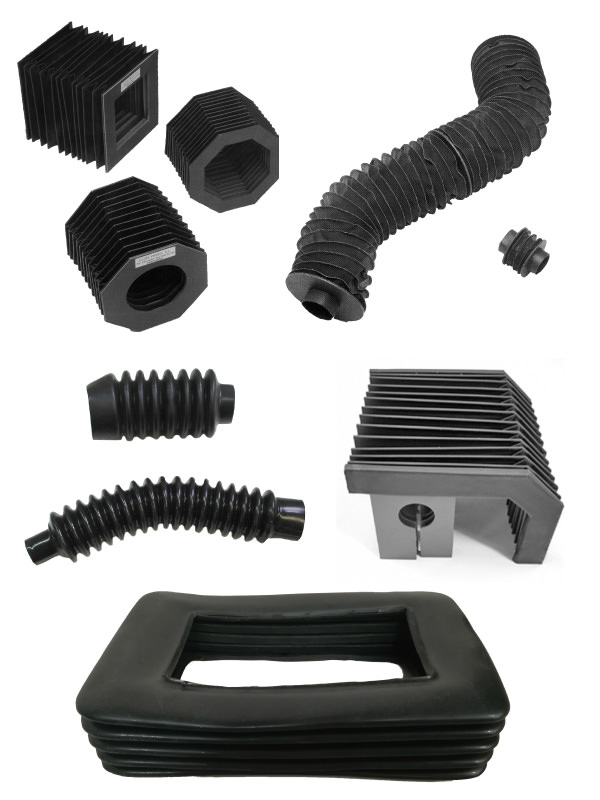
The success of the protection system depends on more than just the choice of raw material; the architecture of the bellows must be configured to drain away liquid and block any potential entry points:
1. Heat-sealed or vulcanized joints: These eliminate the degradation associated with traditional stitching by creating leak-tight assemblies without the need for punctures.
2. Self-draining folds and geometries: Designs that feature an incline or lack retention zones, preventing coolant from pooling on the surfaces of the bellows.
3. Reinforced folds: The inclusion of PVC sheets or rigid internal reinforcements along the edges, which maintain the structural profile during rapid compression cycles.
4. Leak-tight mounting interfaces: Flanges, sealed closures, or metal mounting plates that ensure an airtight connection at the machine’s attachment points.
Key factors for specifying bellows for CNC machinery
To select the precise configuration, the following process variables must be analyzed:
● Coolant chemical composition: Vegetable, mineral, synthetic, or semi-synthetic base.
● Operating pressure and flow rate: Determines whether a lightweight cover or a highly sealed, vulcanized structure is required.
● Axis kinematics: Travel speed, stroke length, and cycle frequency ($L_{\text{min}} / L_{\text{max}}$).
● Proximity to the cutting point: Assesses whether the bellows will also be subjected to the combined impact of hot chips and coolant.
Lluis Creus Solutions: Smart Protection for CNC Machining
At Lluis Creus, we develop custom-made protective bellows designed to withstand continuous exposure to industrial coolants, oils, and cutting fluids. With 150 years of industry experience and ISO 9001:2015 certification, we address the specific requirements of each machining center through a personalized engineering process:
● Advanced selection of polymers and textiles: We analyze the chemical compatibility of our materials with the specific coolant used in your facility.
● Waterjet cutting: We manufacture frames, flanges, and support reinforcements with high precision to ensure a perfect fit.
● Custom designs that prevent fluid accumulation: We develop geometries that facilitate continuous lubricant drainage and align with the kinematics of your servomotors, without creating unnecessary resistance.
If your goal is to eliminate unplanned downtime and extend the service life of the guideways and spindles on your CNC machines, Lluis Creus can manufacture the sealed protection system tailored to your specific needs.