

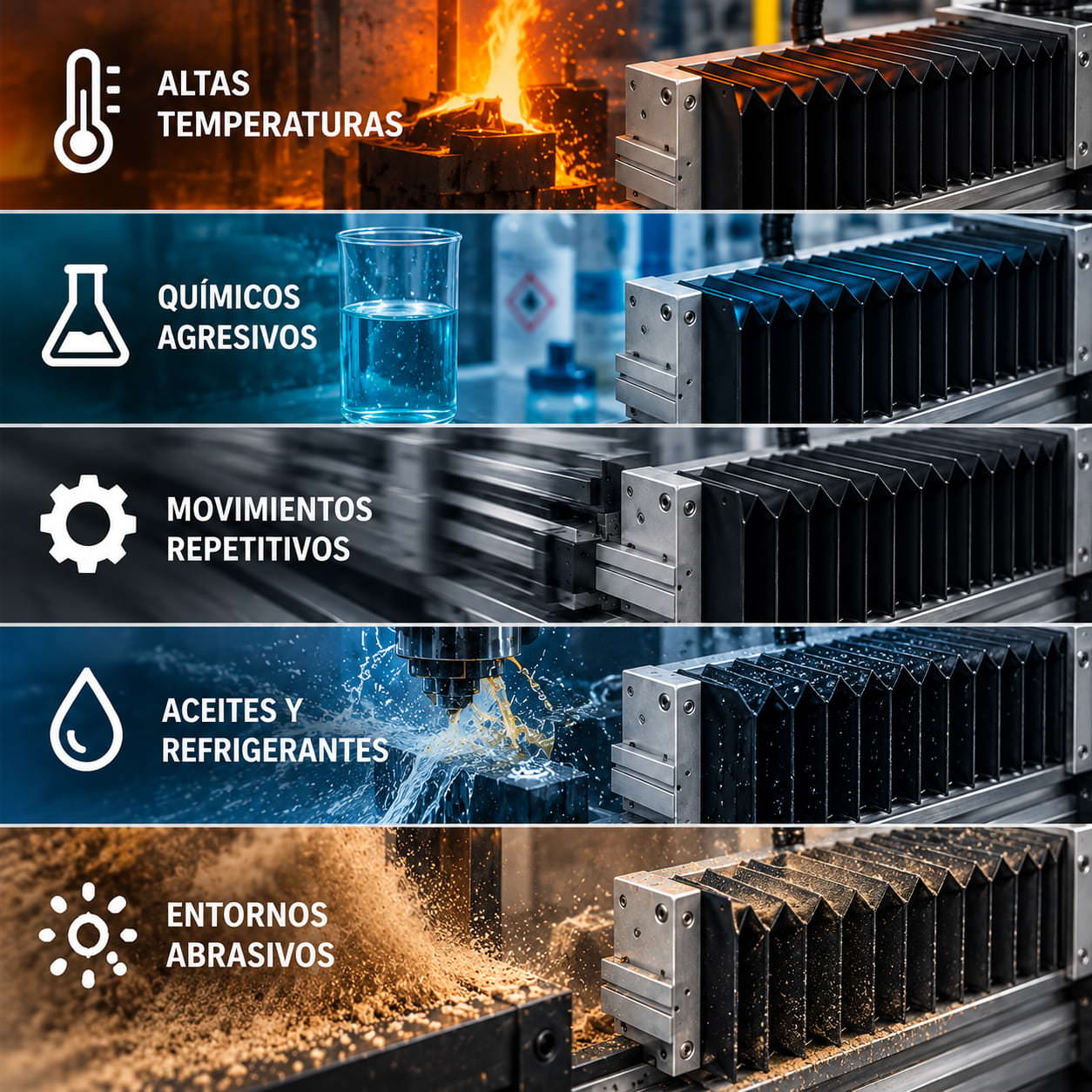
Selecting the material for an industrial bellow is a critical decision that directly impacts the system’s durability, flexibility, resistance, and performance. An unsuitable material can lead to premature wear, deformation, loss of seal integrity, or failure in harsh environments. In this article, we analyze the most commonly used materials and when to choose each one.
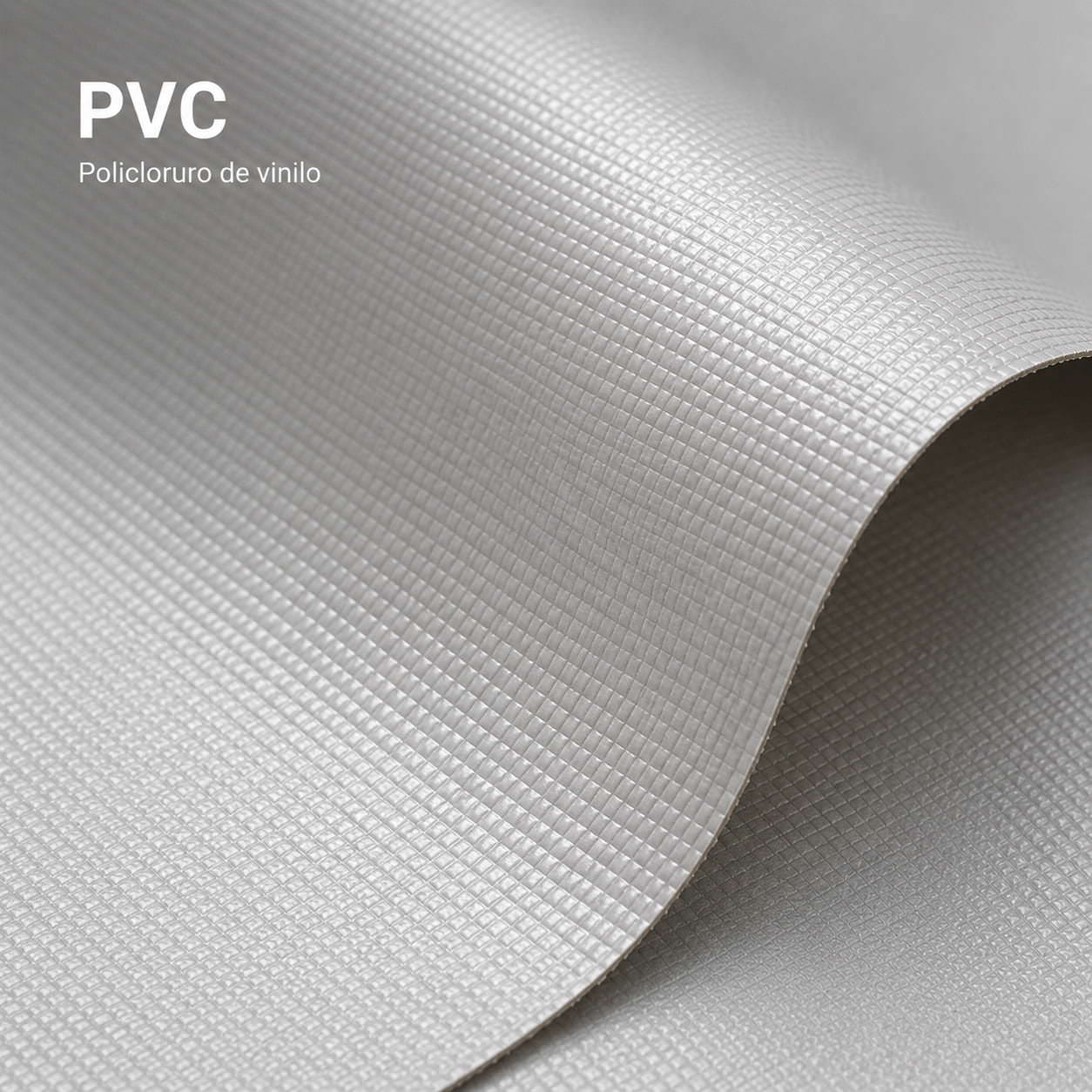
PVC
PVC is one of the most widely used materials for standard applications.
Advantages:
● Cost-effective
● Flexible
● Resistant to oils and coolants
● Easy to manufacture
Limitations:
● Not suitable for high temperatures
● Lower abrasion resistance
Polyurethane
Polyurethane stands out for its flexibility and mechanical resistance.
Advantages:
● Excellent elasticity
● High wear resistance
● Ideal for repetitive movements
Limitations:
● Lower chemical resistance than other materials
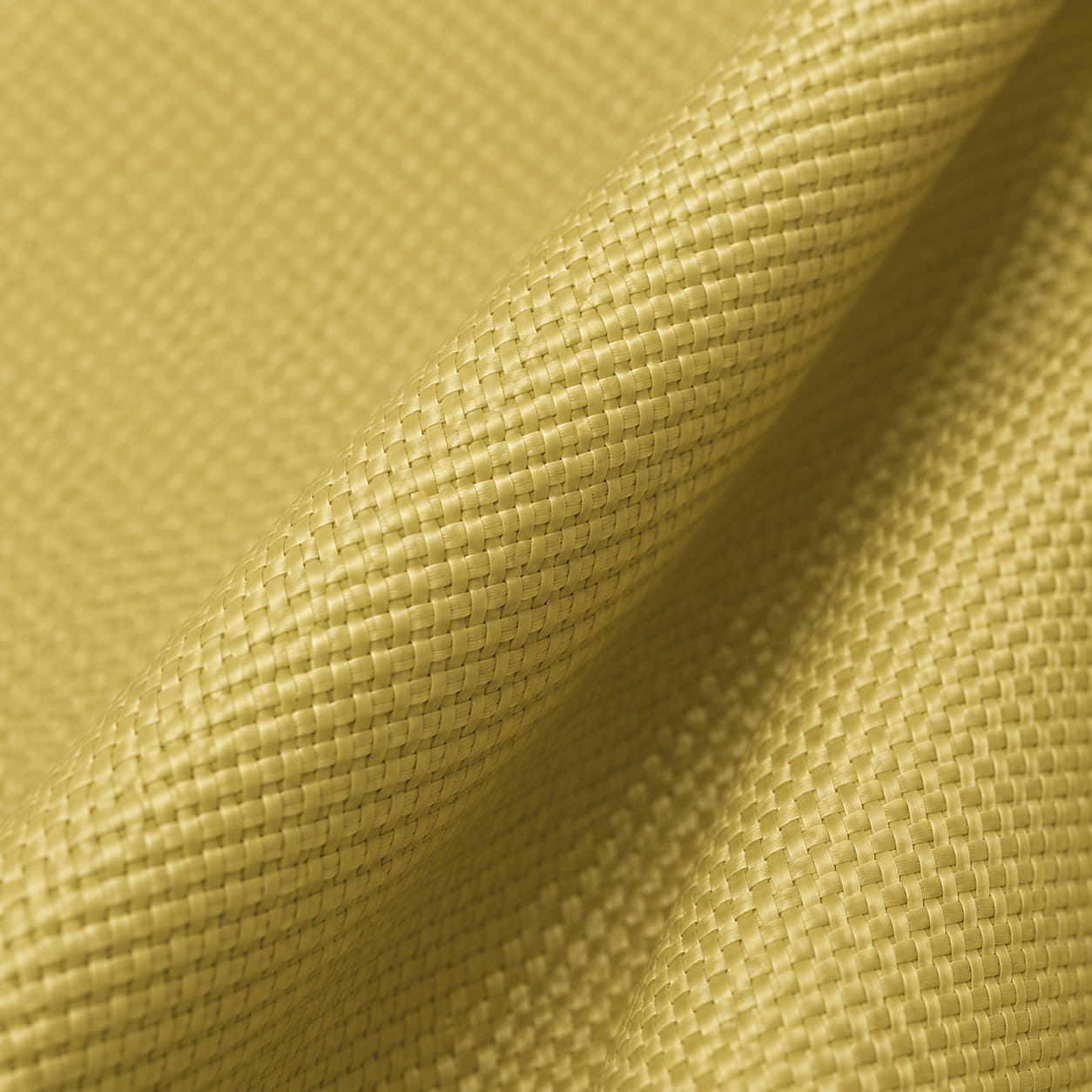
Technical fabrics
Technical fabrics are the most versatile option for demanding environments.
Advantages:
● Abrasion-resistant
● Flame-retardant
● Waterproof
● Multilayer
● Chemical-resistant
Limitations:
● Require specialized manufacturing
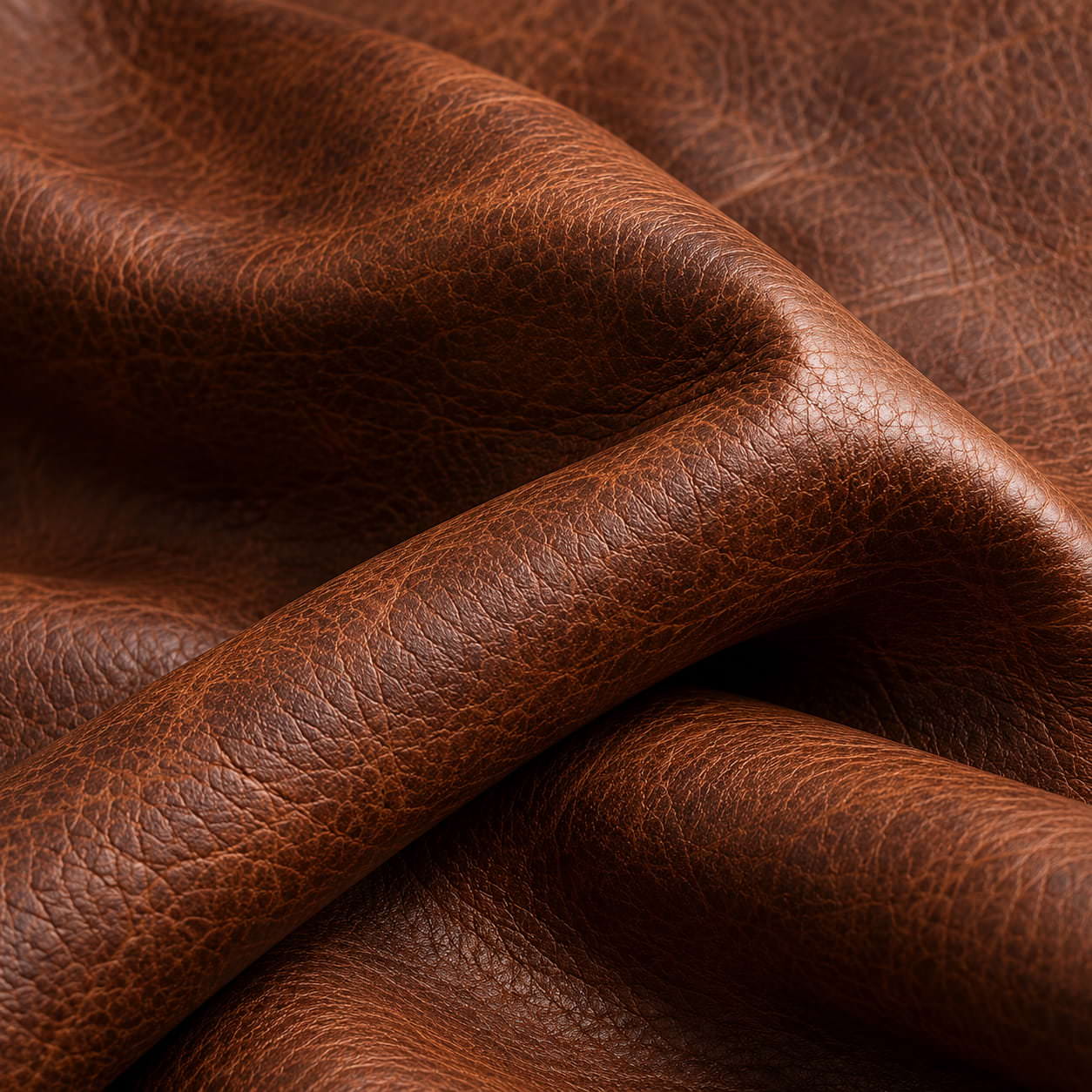
Industrial leather
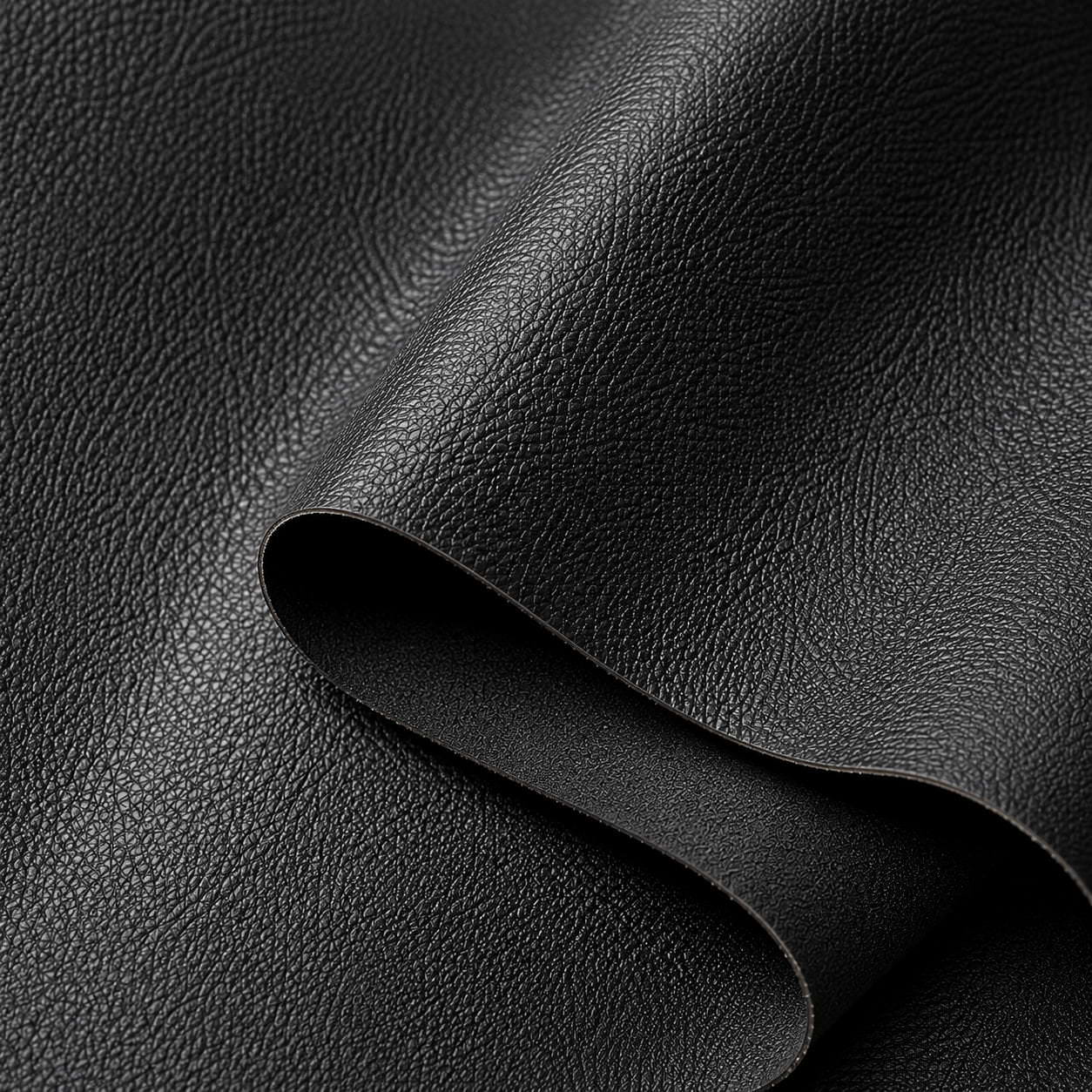
Leather is used in traditional or artisanal machinery.
Advantages:
● Aesthetics
● Natural durability
● Flexibility
Limitations:
● Not suitable for chemicals or high temperatures
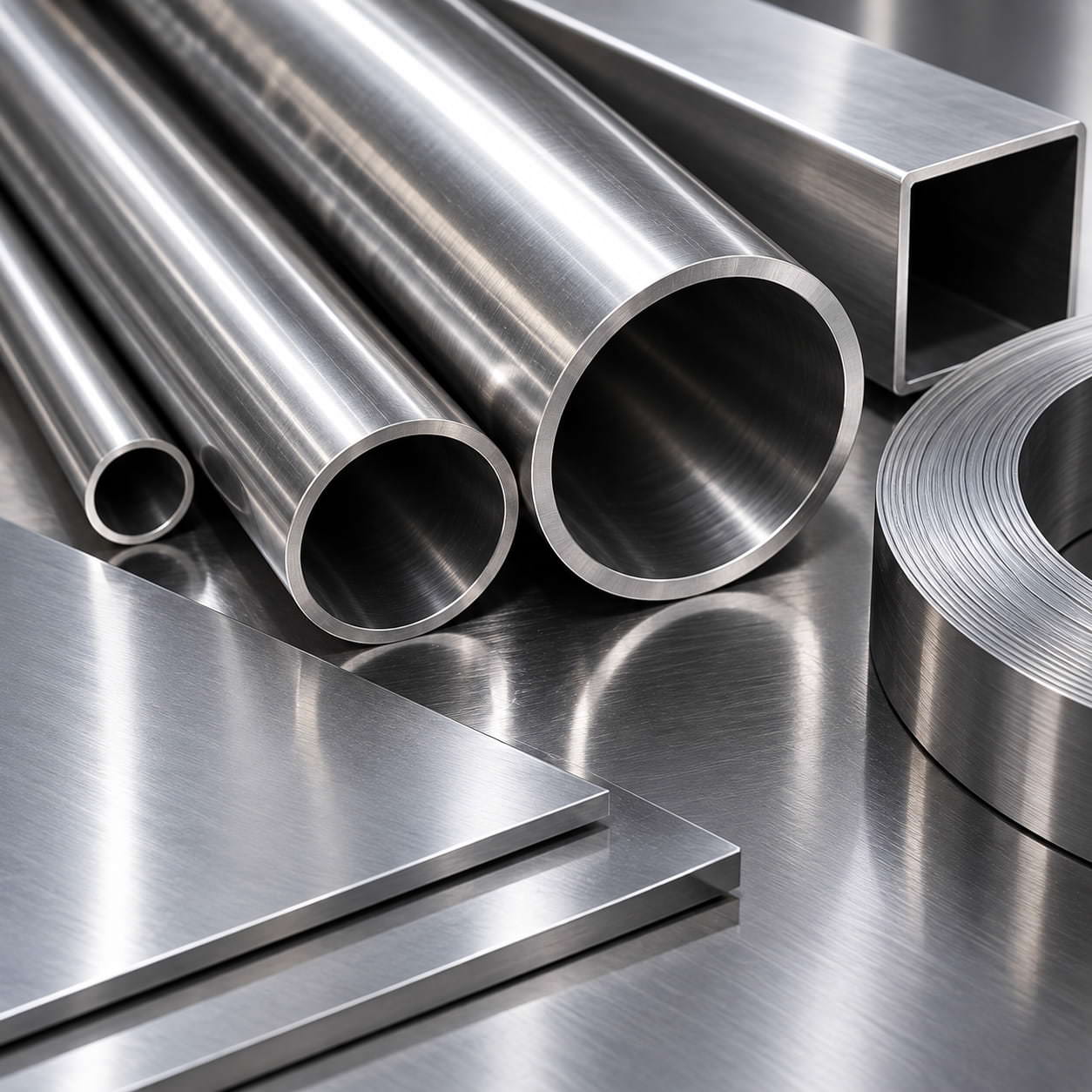
Stainless Steel
Stainless steel is the premium choice for extreme environments.
Advantages:
● High-temperature resistance
● Resistance to aggressive chemicals
● Superior durability
Limitations:
● Lower flexibility
● Higher cost
Conclusion
The choice of material depends on the environment, temperature, movement speed, and type of contaminants. Proper selection ensures durability, precision, and optimal performance. A well-designed bellows always begins with the right material choice.