

Vibrations in industrial machinery are among the most frequent—yet frequently underestimated—problems in engineering. Although much equipment is designed to operate within tight tolerances, the presence of vibrations can compromise precision, accelerate wear, lead to premature failures, and shorten the service life of critical components such as linear guides, actuators, lead screws, and positioning systems. In sectors like CNC machining, automation, robotics, and internal transport, vibrations directly impact the quality of the final product and operational costs.
The good news is that a significant portion of these vibrations stems from a common cause: contamination within motion systems. This article explores how industrial protection—specifically bellows, protective curtains, and dust covers—can help reduce vibrations, improve precision, and extend the service life of machinery.
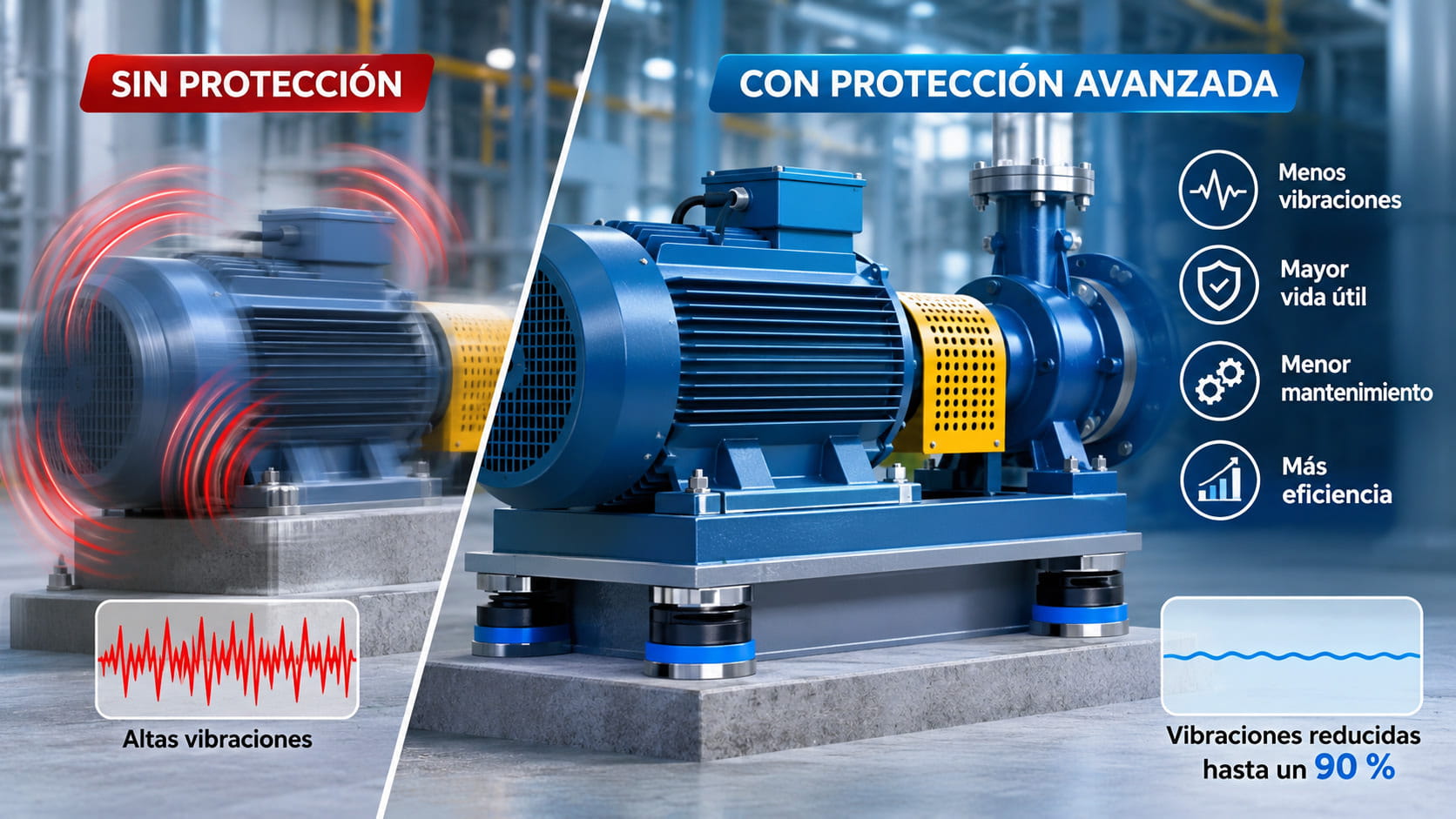
Why vibrations occur in industrial machinery
Vibrations can have multiple causes, but in most cases, they are related to irregularities in linear or rotary motion. These irregularities are typically the result of:
Micro-abrasion caused by particles
When metal chips, dust, or abrasive particles enter linear guides, they cause micro-abrasions that alter friction. This leads to irregular movement, a loss of parallelism, load variations, and oscillations in the servo system.
Contaminated lubrication
The presence of particles in the lubricant causes accelerated wear and irregular friction, which results in constant vibrations.
Misalignment due to wear
Contamination can lead to uneven wear, causing progressive misalignment and mechanical vibrations.
Coolant and chemicals
Pressurized coolant can introduce particles into critical areas, affecting the stability of motion.
How protection eliminates vibrations
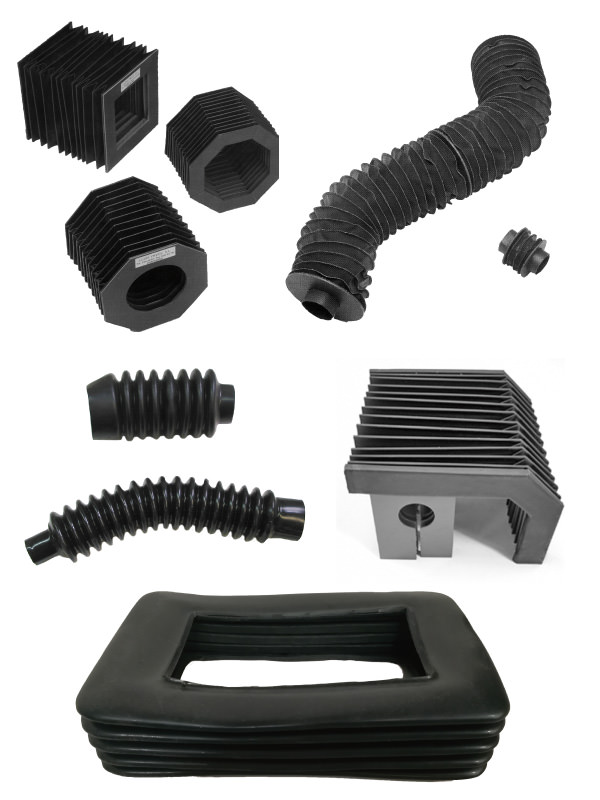
The most effective way to reduce vibrations is to prevent contamination from reaching moving components. To achieve this, protective systems are used, such as:
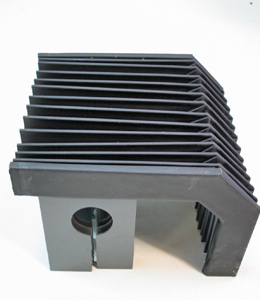
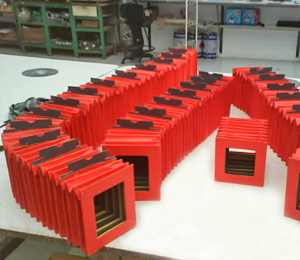
Bellows for CNC machine beds
These prevent chips and dust from reaching linear guides, maintaining constant friction.
Square bellows for prismatic guides
Designed to protect angular geometries and long travel paths.
Roll-up covers
Ideal for machines with extensive travel and high operating speeds.
Dust covers for actuators
These prevent leaks and wear in hydraulic and pneumatic cylinders.
Technical benefits of protection
Installing appropriate protection systems offers measurable benefits:
● Reduction in vibrations by up to 40%
● Greater positioning accuracy
● Reduced wear on guides and actuators
● Lower mechanical noise
● Improved machining quality
● Fewer maintenance-related downtimes
● Extended service life for critical components
Recommendations for engineers
To maximize vibration reduction, it is recommended to:
● Incorporate protection from the initial machine design stage
● Select anti-abrasion materials for environments with hot metal chips
● Check the sealing integrity of bellows during intensive operating cycles
● Combine protective measures with automatic lubrication
● Monitor vibrations using predictive sensors
Conclusion
Vibrations cannot always be resolved by adjusting parameters; often, they are eliminated by properly protecting moving components. A well-designed protection system ensures precision, stability, and an extended service life.