

In a wastewater treatment plant, bellows are among the most abused and least-received components. They operate submerged in an aggressive environment, enduring constant vibrations, pressure variations, and the continuous action of two silent enemies: hydrogen sulfide (H₂S) and abrasive sludge. When they fail, the consequences extend far beyond a simple leak.
The real problem: it’s not the water, it’s what’s in it.
Wastewater circulating through a treatment plant isn’t just water. It’s a mixture of organic compounds, suspended solids, grease, and corrosive gases. H₂S is especially destructive because it directly attacks the elastomer of the wastewater treatment plant’s bellows from the inside, progressively degrading the material until it becomes brittle.
The abrasive sludge, meanwhile, acts on the contact surfaces and the clamping flanges. Each work cycle is like sandpapering the most vulnerable points of the joint.
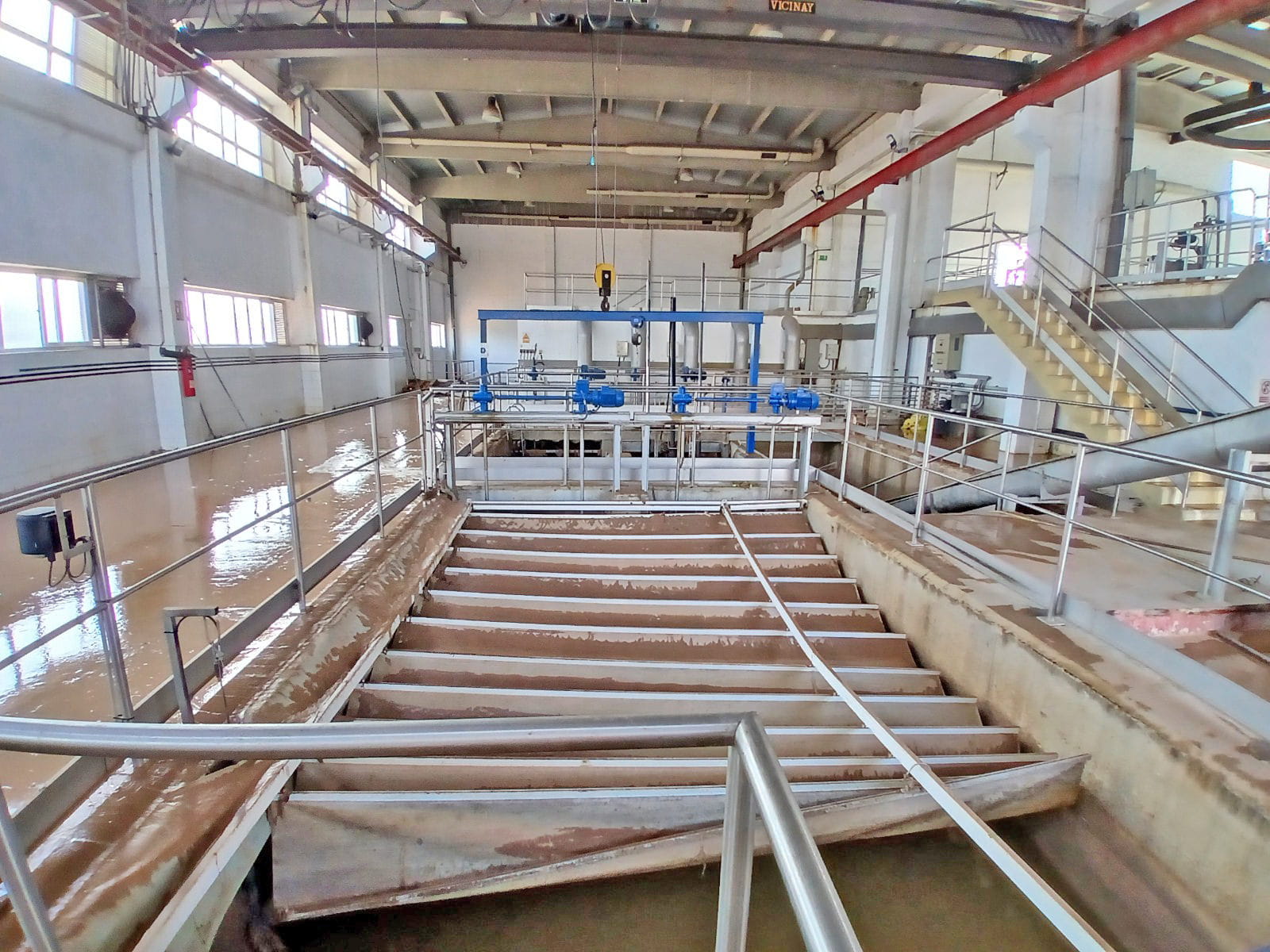
The 3 areas where failure first appears:
The anchor flanges. This is the first point where corrosion manifests. The combination of humidity, H₂S, and mechanical stress causes accelerated oxidation and loss of watertightness around the mounting perimeter. A poorly anchored wastewater treatment plant bellows or one with deteriorated flanges is a leak waiting to happen.
The bellows body. Prolonged exposure to corrosive gases hardens and cracks the elastomer. The cracks begin at the folds, where flexing is greatest, and progress into the material. By the time they are visible, the structural damage is already extensive.
The pipe connections. Thermal expansion and equipment vibrations generate cyclical stresses at the ends of the bellows. If the material has lost elasticity due to chemical degradation, these stresses are not absorbed, and the connection eventually fails.
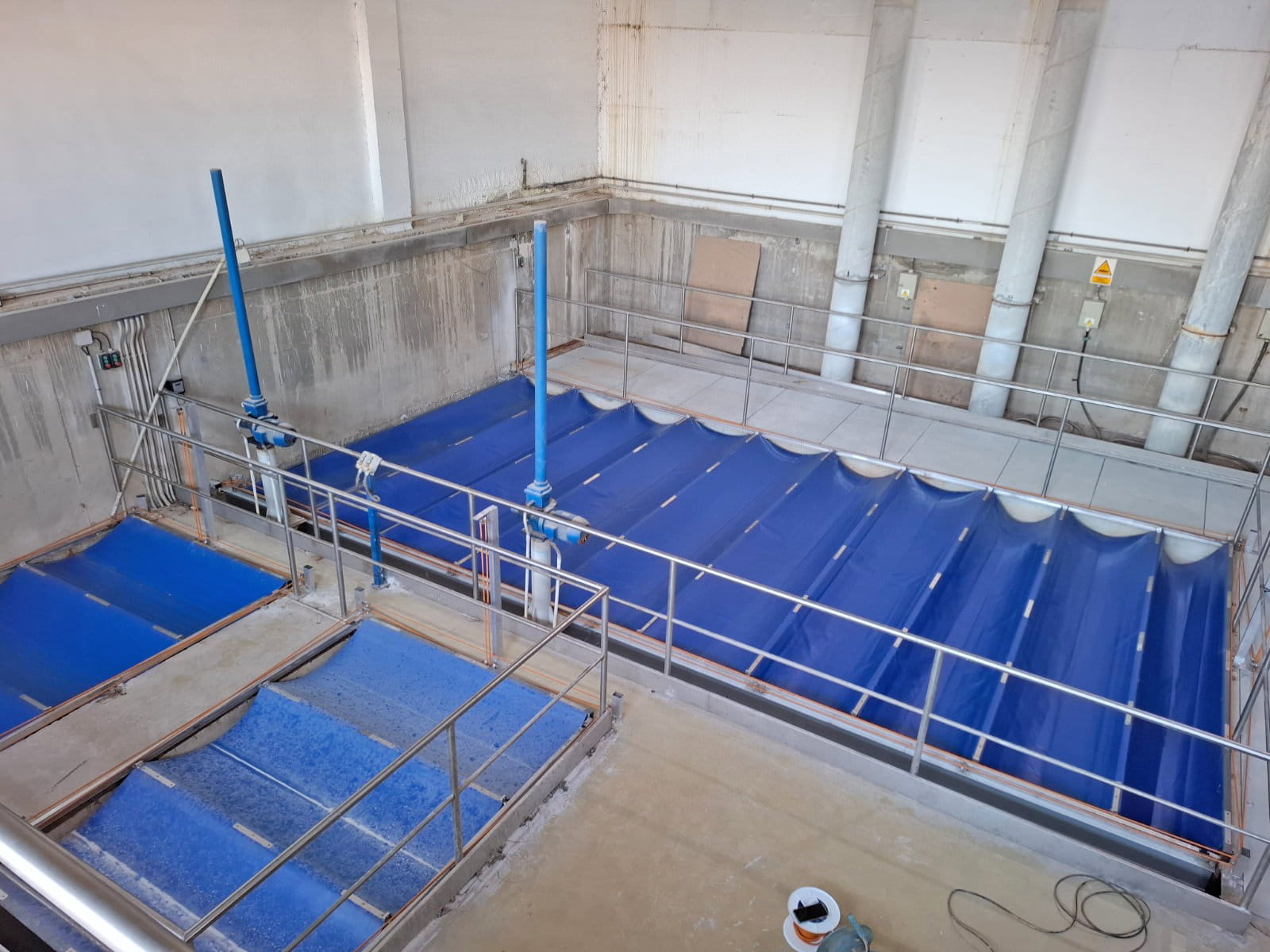
The mistake that multiplies maintenance costs
Replacing wastewater treatment plant bellows only when there’s a visible leak. By then, there’s already environmental contamination, potential damage to adjacent equipment, and an unplanned shutdown that interrupts the treatment process. The cost of a bellows is negligible compared to the cost of an emergency shutdown at a wastewater treatment plant.
The solution is simple: establish an inspection frequency based on the actual conditions of each facility and take action before deterioration reaches the point of failure.
What to expect from a Wastewater Treatment Plant Bellows in H₂S Environments
Not all wastewater treatment plant bellows are created equal. For installations with H₂S and abrasive sludge, the elastomer material is crucial. Before specifying or replacing a bellows, it’s important to understand these points:
● The elastomer’s chemical resistance to H₂S and other compounds present in the wastewater
● The capacity to absorb axial, lateral, and angular movements based on the actual stresses of the installation
● The nominal working pressure and actual safety margin
● The compatibility of the flanges with the existing piping
With this information, you can select the appropriate wastewater treatment plant bellows for each critical point in the installation, instead of installing a generic component that will fail prematurely.
Conclusion
In a wastewater treatment plant, H₂S and abrasive sludge are unforgiving of poorly specified components and improvised maintenance. Wastewater treatment plant bellows are a key component for the integrity of the pipelines, and their failure has a direct impact on the continuity of the process. Inspect them carefully and replace them with the appropriate ones.