

If your plant handles combustible dusts or flammable gases, you already know that safety isn’t optional. It’s a legal requirement. But there’s one element that many companies overlook in their ATEX zones: protective bellows.
A seemingly harmless component can become the weak point in your machine protection and ATEX safety.

The silent risk of conventional materials
A standard bellows, made of common synthetic materials, has a problem: it generates electrostatic charge due to the friction of its folds during cylinder movement.
Under normal conditions, this charge accumulates without visible consequences. But in an ATEX-classified area, an unintentional electrostatic discharge can be enough to trigger an explosion if there is a critical concentration of combustible dust or flammable gas in the environment.
The result is not just a production stoppage. We are talking about risks to people, structural damage, and legal liabilities. Therefore, industrial maintenance in these environments must exercise extreme caution with every installed component.
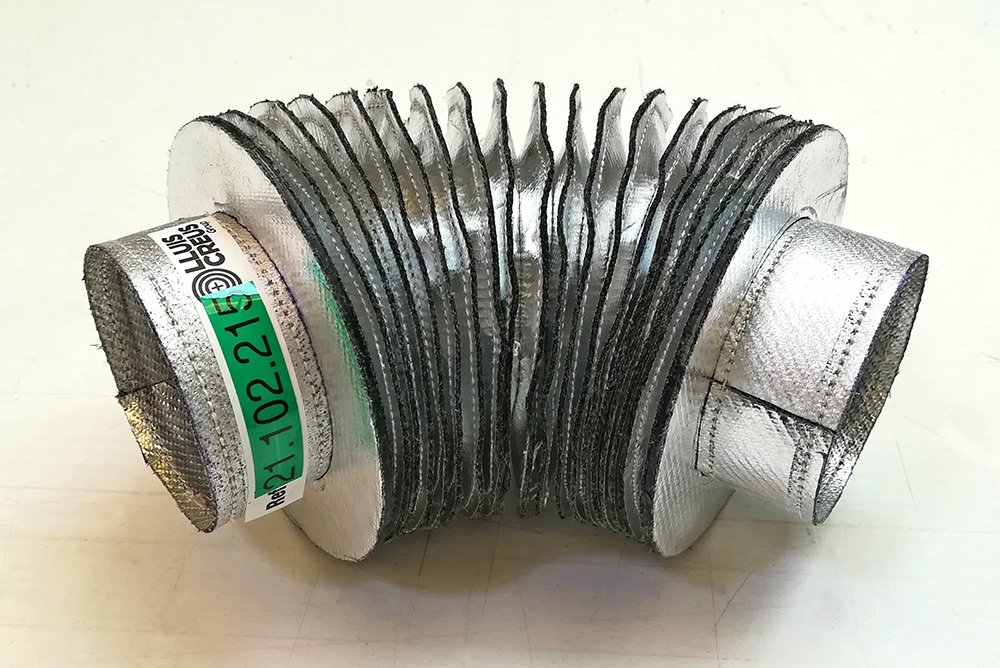
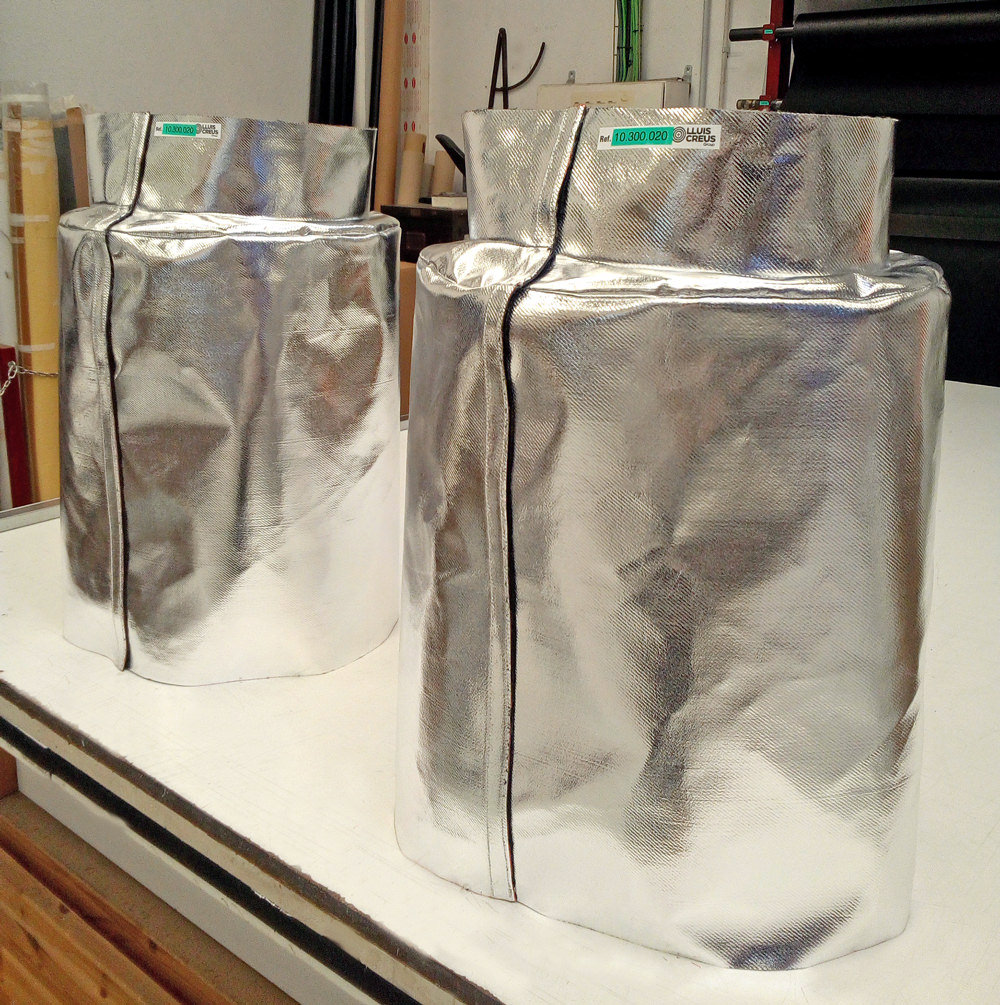
Materials that prevent sparks and static buildup
The solution is not to eliminate bellows, but to use appropriate antistatic materials. In ATEX environments, bellows must be made of conductive technical fabrics that dissipate static charge in a controlled manner.
These spark-resistant materials offer an essential property: they channel static electricity to ground instead of accumulating it on the surface. Furthermore, they are designed not to propagate flames in the event of exposure to an external ignition source, thus meeting explosion prevention requirements.
Tailor-made solutions for your plant
At Lluís Creus, we manufacture protective bellows specifically designed for ATEX zones. We select the appropriate technical fabric based on the zone type (20, 21, 22 for dust or 0, 1, 2 for gases) and the risk present in your facility.
Our solutions guarantee that machine protection strictly complies with current ATEX explosion prevention regulations.