

In a wastewater treatment plant, everything is designed for continuous operation. Pumps, agitators, scrapers, grit chambers, blowers, and thickeners work 24/7 in aggressive and highly corrosive environments.
However, many problems don’t start with the main equipment.
They start with the protection.
A damaged bellows. A closure that doesn’t fit properly. A makeshift cover after maintenance.
Industrial bellows for wastewater treatment plants and custom-made technical closures are not accessories. They are key elements for ensuring operational continuity, safety, and control of the work environment.
The problem with standard solutions in a wastewater treatment plant
Each WWTP has its own unique configuration:
- Walkways and railings added over time
- Partial renovations
- Relocated pipes
- Equipment from different manufacturers
In this context, a standard bellows rarely fits correctly.
When the protection is not adapted to the actual geometry of the equipment, common problems arise:
- Splashing into walkways
- Accumulation of solids in poorly designed folds
- Pockets of trapped water
- Ingress of moisture and contaminants into mechanical systems
- Increased corrosion of metal components
The result is more corrective maintenance and greater premature wear.
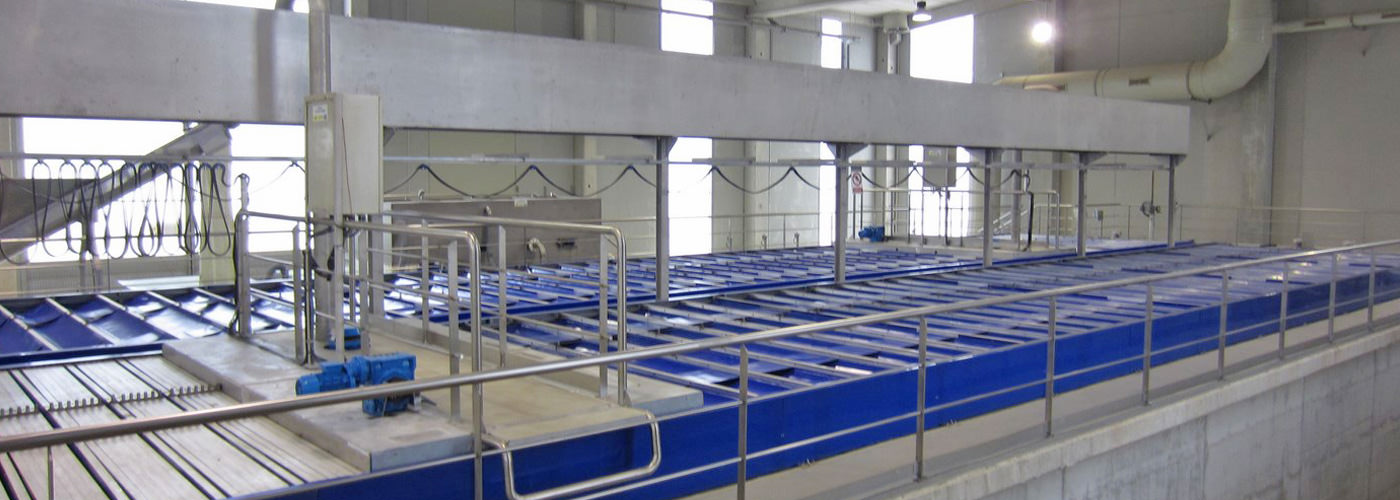
What does an industrial bellows specifically designed for wastewater treatment plants offer?
Custom design always begins with the actual installation:
- Measurement of the travel distance of scraper bridges or lifting systems
- Analysis of interference points
- Definition of inspection openings
- Study of the fixing and sealing system
A properly designed industrial bellows for a wastewater treatment plant:
- Moves smoothly without tension
- Prevents lateral leaks
- Prevents solids accumulation
- Facilitates cleaning
- Reduces corrosion points
It’s not just about covering, but about controlling the equipment’s environment.
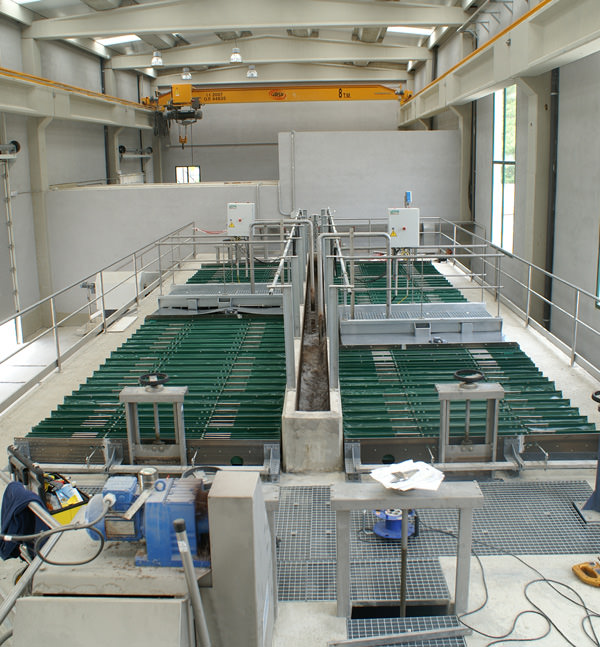
Materials resistant to aggressive environments in wastewater treatment plants
A wastewater treatment plant combines particularly demanding factors:
- Constantly high humidity
- Presence of corrosive gases (such as hydrogen sulfide)
- UV radiation in outdoor areas
- Contact with sludge and grease
- Sand and solid debris projections
Therefore, the selection of materials for industrial closures and bellows in wastewater treatment plants is critical.
Coated technical fabrics, chemical-resistant elastomers, multi-layer combinations, or reinforced solutions increase resistance to:
- Chemical corrosion
- UV degradation
- Fatigue from continuous movement
- Abrasion tearing
A correct design combined with a suitable material significantly reduces premature replacements.
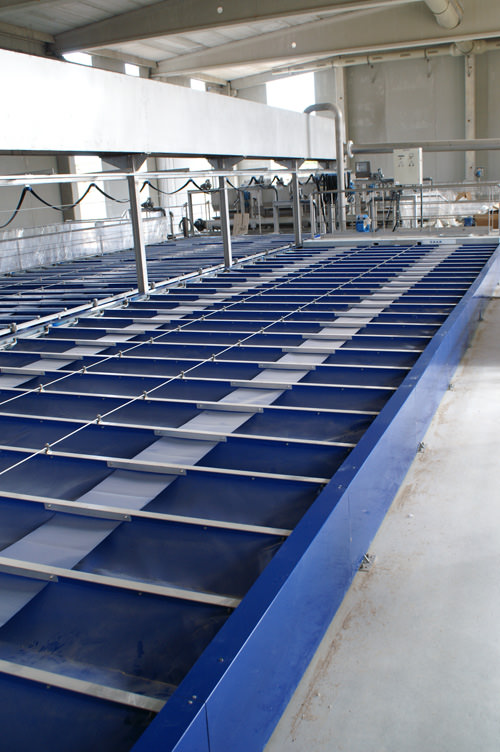
Impact on safety and maintenance in wastewater treatment plants
Wastewater treatment plants present clear operational risks:
- Wet surfaces
- Contaminant aerosols
- Areas with difficult access
- Elevated walkways
Custom-designed technical enclosures allow for:
- Channeling splashes
- Reducing personnel exposure
- Maintaining drier walkways
- Avoiding unsafe temporary solutions
A well-designed protection system not only protects the equipment, but also the operator.
Operational availability and cost reduction in wastewater treatment plants
In the medium term, the impact is clear:
- Fewer solids entering mechanisms
- Reduced structural corrosion
- Fewer corrective interventions
- Reduced intensive cleaning hours
- Greater operational stability
Industrial bellows for wastewater treatment plants may not be as prominent as a pump or blower, but they directly influence the overall reliability of the plant.
When they fail, it’s noticeable.
When they are well-designed, they are practically invisible.
Conclusión
Investing in customized technical protections for wastewater treatment plants is not an additional cost; it’s a preventative measure that protects:
- Critical equipment
- Personnel
- Facilities
- Maintenance budget