

Linear guides are one of the most important components in CNC machinery, industrial automation, robotics, and precision systems. Their performance determines the accuracy, repeatability, and lifespan of the entire machine. However, they are also among the elements most exposed to contamination, abrasion, misalignment, and premature wear.
In this article, we analyze how to extend the lifespan of linear guides, what factors influence their deterioration, and what protective solutions can improve system reliability.
Why linear guides fail prematurely
Linear guides are designed to withstand heavy loads and repetitive movements with very tight tolerances. Even so, their operating environment is often harsh, leading to premature failure.
1. Contamination by chips, dust, and particles
This is the most common cause of failure. Particles generate micro-abrasion, increase friction, and cause vibrations that affect the accuracy of movement.
2. Insufficient or incorrect lubrication
Poor lubrication accelerates wear, causes corrosion, and reduces the system’s lifespan.
3. Overloading or misalignment
Improper mounting or unforeseen loads can deform the guide and cause structural failure.
4. Aggressive coolants and chemicals
Many fluids penetrate the system and degrade internal components, especially in CNC machinery.
How to extend the service life of linear guides
1. Implement adequate protection systems
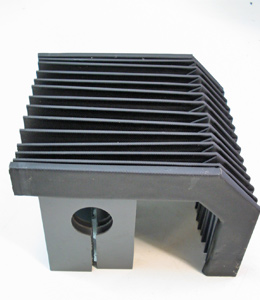
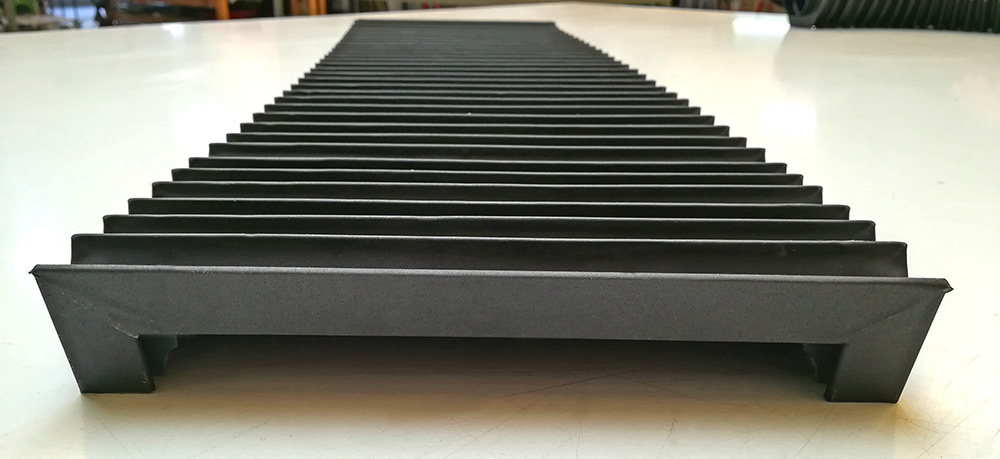
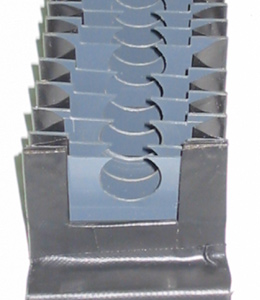
The most effective way to increase service life is to prevent contamination from reaching the guide. Protection solutions such as bellows and roller curtains prevent chips, dust, coolant, and abrasive particles from coming into contact with the guide, maintaining constant friction and reducing wear.
The direct benefits are clear: less corrective maintenance, greater positioning accuracy, reduced vibration, and increased machine availability.
2. Select the appropriate protection material
Not all machines require the same type of protection. The choice of material depends on the ambient temperature, the presence of chemicals, the type of chips, the speed of movement, and the available space.
Among the most commonly used materials are abrasion-resistant technical fabrics, polyurethane for high flexibility, PVC for standard environments, and stainless steel for extreme protection. Choosing the right material is key to ensuring durability and performance.
3. Maintain consistent and proper lubrication
Lubrication is essential to prevent internal wear. It is recommended to use lubricants compatible with the environment, implement automatic lubrication systems on 24/7 lines, and periodically check the condition of the seals. Contaminated lubrication can cause failures even in protected guides.
4. Verify alignment and assembly
A misaligned guide can fail even with good protection and lubrication. It is essential to check parallelism, perpendicularity, clamping torque, and actual loads against expected loads.
5. Monitor condition through predictive maintenance
Integrating sensors allows for the detection of increased friction, abnormal vibrations, positioning deviations, and internal wear. Proper protection improves the reliability of these sensors, preventing erroneous readings due to contamination.
How protection can increase lifespan by up to 40%
Studies in CNC environments show that linear guides protected with bellows or roller curtains can increase their lifespan by 25% to 40%, depending on the environment. This translates into fewer replacements, fewer unscheduled downtimes, greater sustained accuracy, and reduced operating costs.

Conclusion
Extending the lifespan of linear guides depends not only on lubrication and maintenance. The key is to protect them properly from the design stage or through machine-specific solutions. Protective bellows, roller curtains, and technical fabrics are essential tools for any engineer who wants to improve the reliability of their machinery, reduce maintenance costs, increase accuracy, and extend the lifespan of critical components.