
In any metal construction project, everything begins with the plans: precise dimensions, calculated loads, defined paths, and critical welding points.
But when the structure enters service, the real-world environment imposes other variables:
- Dust and abrasives
- Welding spatter
- Constant humidity
- Marine or corrosive environments
- Exposed moving parts
It is at this point that industrial protection for metal structures ceases to be an add-on and becomes a strategic element for reliability.
Identifying vulnerable points on the plans
A steel structure does not typically fail at the main profile. Failure in moving parts and exposed points:
- Hydraulic cylinders on lifting platforms
- Linear guides on rotary tables
- Adjustment spindles
- Joints on moving walkways
- Chains and transmission systems
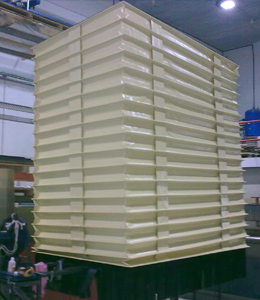
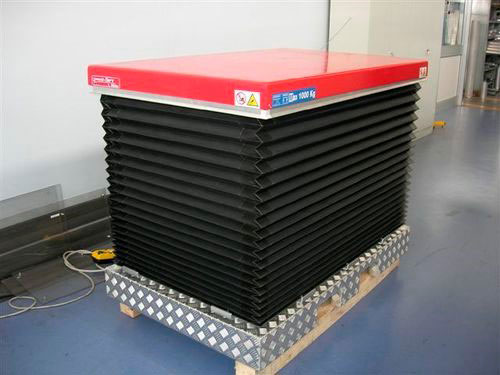
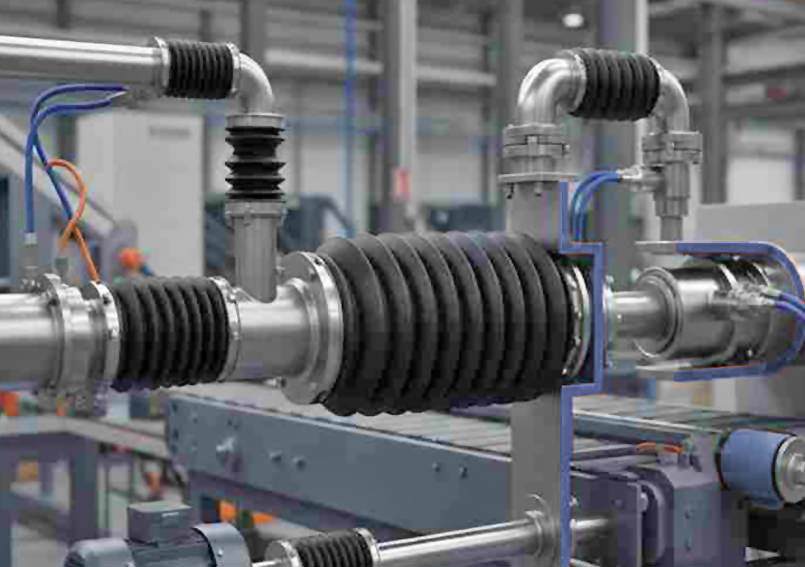
Designing industrial bellows for steel machinery from the engineering phase allows for:
- Seamlessly integrating protection
- Preventing premature friction and stress
- Ensuring protection against dust and moisture
- Facilitating assembly and subsequent maintenance
The difference lies in anticipating the real-world environment, not reacting when problems arise.
Protection in special steel machinery
In special machines, compactors, presses, and heavy load handlers, the risks change:
- Metal dust
- Lubricants
- High temperatures
- Projections
Here, guards for guides, spindles, and hydraulic cylinders do more than just provide coverage. They must:
- Prevent particles from entering critical areas
- Channel fluids to drains
- Withstand repetitive cycles without fatigue
- Allow for cleaning without complex disassembly
Integrating bellows and technical seals during the design phase reduces subsequent adjustments and avoids improvised solutions on-site.
Competitive advantage in metal construction projects
From a commercial perspective, delivering a structure with integrated safety features offers:
- Reduced operational risk for the client
- Reduced maintenance costs
- Improved perception of technical quality
- Increased installation durability
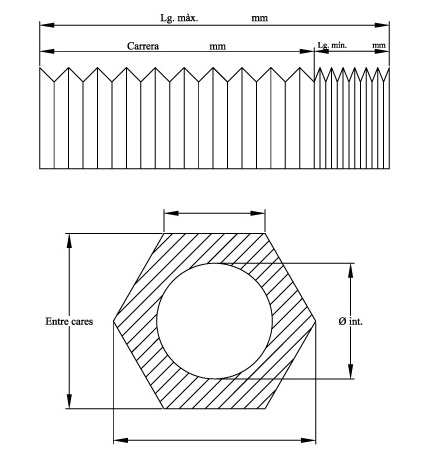
Furthermore, working with digital plans allows for:
- Precise measurements
- Design adapted to real-world dynamics
- Agile prototyping
- Production without on-site adjustments
In projects where deadlines are critical, this integration reduces deviations and delays.
Beyond covering: anticipating real problems
In steel structures and machinery, issues typically arise not from the theoretical design, but from continuous exposure to the environment.
Intelligent industrial protections allow you to anticipate:
- Accelerated corrosion
- Abrasion wear
- Contamination of mechanisms
- Downtime due to premature failure
It’s not about simply adding a cover.
It’s about designing a solution that accommodates movement, the environment, and the equipment’s life cycle.
Conclusion
Moving from drawing to reality with well-integrated protections means delivering metal structures that are:
- More durable
- Safer
- More reliable
- With a lower life cycle cost
In industrial metal construction, the difference between a project that “works” and one that truly excels often lies in the details that protect what moves.
In demanding environments, proper protection is part of the design, not an afterthought.