

When designing a machine from scratch, the bellows are often added at the end of the process, almost as an afterthought. The kinematics are defined, the stresses are calculated, the main components are chosen, and, with the design practically finalized, the search begins for “something to protect” the spindle, cylinder, or guide column.
This order is precisely the source of most problems. These aren’t material defects; they are integration errors that appear in the design phase and are paid for later, on the factory floor. These are the five most common ones.
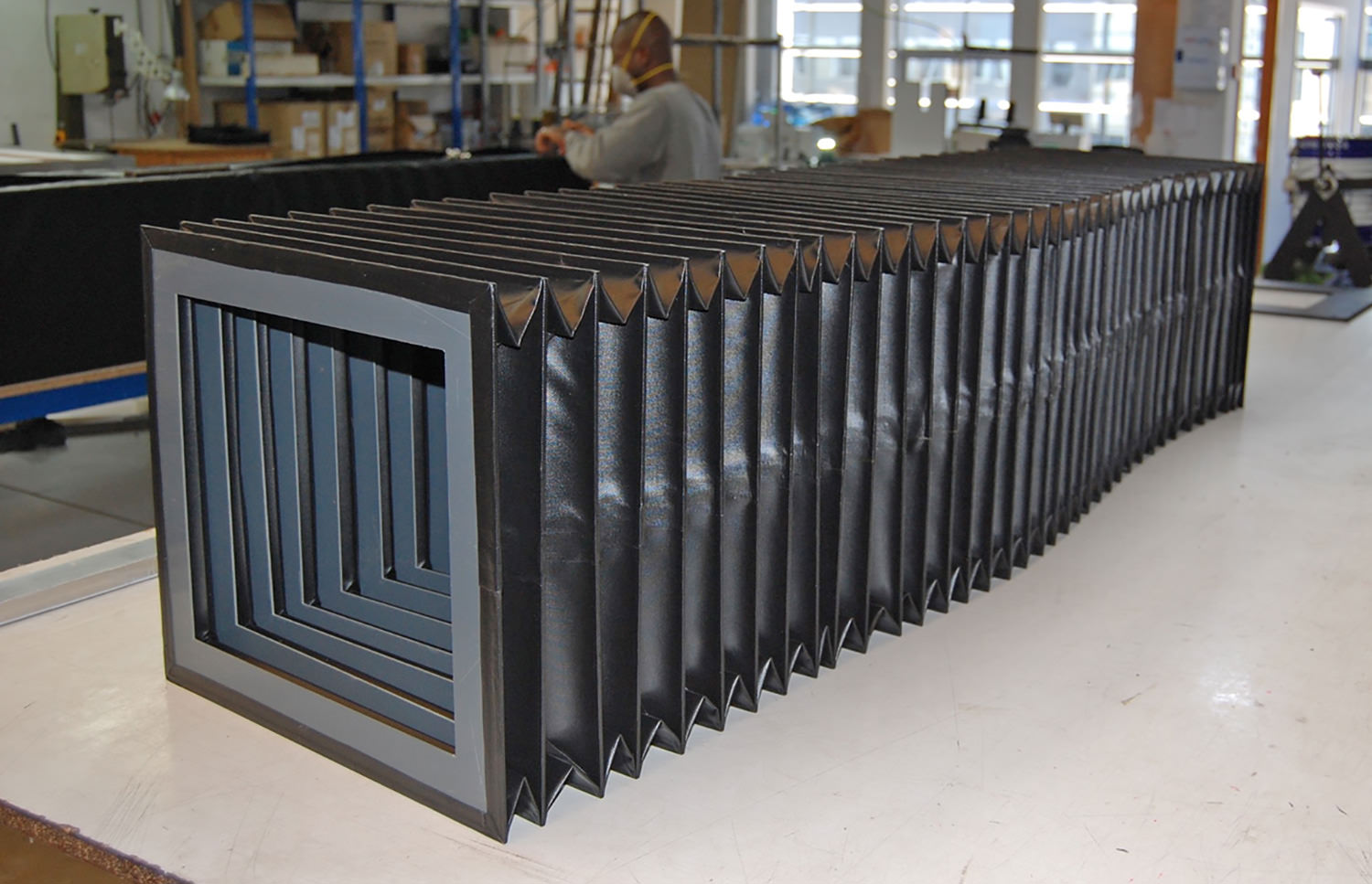
1. Calculating the maximum opening without real operating margin
This is the most common mistake. The theoretical shaft travel dimension is used, and the bellows are specified precisely for that measurement, without considering assembly tolerances, operating clearances, or wear accumulated over time.
The result: a bellows that fits just right, without any margin, and which, as soon as the system experiences even a slight deviation, leaves areas of the component exposed. The maximum opening must be calculated based on the actual travel under operating conditions, not on the nominal catalog travel.
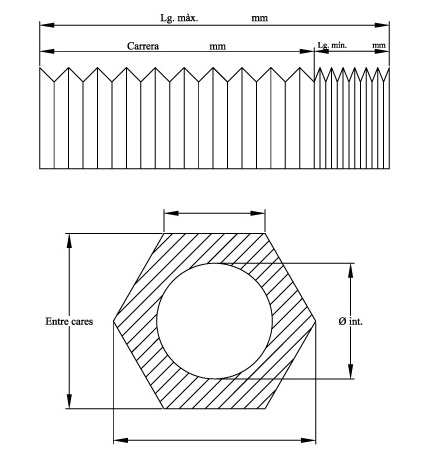
2. Assuming linear motion without verification
Not all axes that “appear” linear are, in practice, linear. Vibrations, minor misalignments, or combined movements in multiple planes can transform a seemingly simple path into nonlinear motion.
Specifying a conventional bellows for these cases forces a component beyond its design range. The controlled folding of the bellows is not designed to absorb this type of movement, and the part will fail due to fatigue at the folds much sooner than expected. This is where a sleeve, sleeving, or compensator is usually the correct solution, not the bellows.
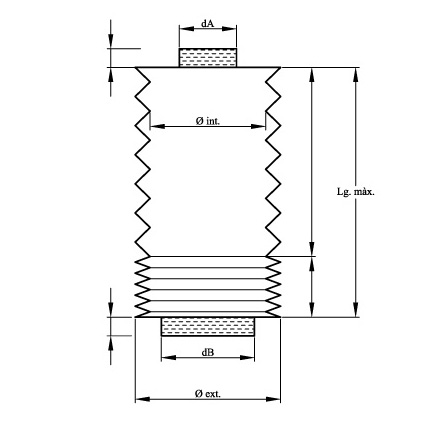
3. Failure to define the working environment in the specification
It is common to receive quote requests with exact diameter and length dimensions, but without a single line about the environment: operating temperature, presence of chemical agents, exposure to fine particles, or cleaning requirements.
Without this information, the manufacturer works with a generic technical fabric, which may not be suitable. A bellows designed for standard conditions, installed in a corrosive or high-temperature environment, will fail in a fraction of its expected lifespan. The environment influences the material as much as the geometry.
4. Underestimating the joint
Design often focuses on the bellows body, but the point where it attaches to the machine is frequently the first to fail. A poorly sized joint, without sufficient reinforcement to withstand vibration or constant friction from the environment, compromises the entire protection, even if the body material is correct.
This error is especially critical in applications with constant vibration or submerged work, where the joint receives more stress than the rest of the part.
5. Integrating the bellows at the end of the design, not alongside it.
This is the root of the four previous errors. When the bellows is incorporated into the design after the kinematics, surrounding materials, and available space have already been finalized, the options are reduced and the fit becomes forced.
Involving the guard manufacturer in an early design phase allows for adjusting the geometry, material, and type of guard (bellows, cover, or compensator) to the actual machine conditions, rather than adapting the machine to a generic catalog guard.
The common denominator
These five errors share the same effect: a guard that performs its function on paper, but fails in service much sooner than expected.
The good news is that none of them require redesigning the entire machine. Simply review the guard specification with the correct information:
Actual travel distance of the part, not just the theoretical distance. Type of movement: linear or non-linear. Working environment: temperature, agents present, particles. Requirements of the connection point, especially with vibration or immersion.
If you are in the design phase of a new machine, the most efficient approach is to share this data with the manufacturer before finalizing the geometry.
This is the difference between integrating a custom guard from the outset or having to replace it just a few months after commissioning.
Are you designing a new machine and need to define the guard from the beginning? Tell us about the project conditions, and we’ll help you specify it correctly.