

In the aerospace industry, there is no room for error. Every dimensional deviation, every unplanned downtime, and every machine malfunction directly impacts:
- Delivery times
- Production costs
- Regulatory compliance
- Supplier reputation
Machine tools, 5-axis machining centers, test benches, and specialized tooling operate under extreme demands. However, mechanical protection is often still treated as a secondary consideration.
In reality, industrial bellows for the aerospace sector are a critical component for ensuring process stability and operational continuity.
Why mechanical protection is strategic in aerospace
In aerospace environments, we find:
- Machining of aerospace-grade aluminum and titanium
- High generation of abrasive chips
- Intensive use of coolants
- Fine dust from composite materials
- Short production runs with frequent part changes
Without adequate protection, these factors directly affect:
- Linear guides
- Lead screws
- Racks
- Sensors
- Measuring systems
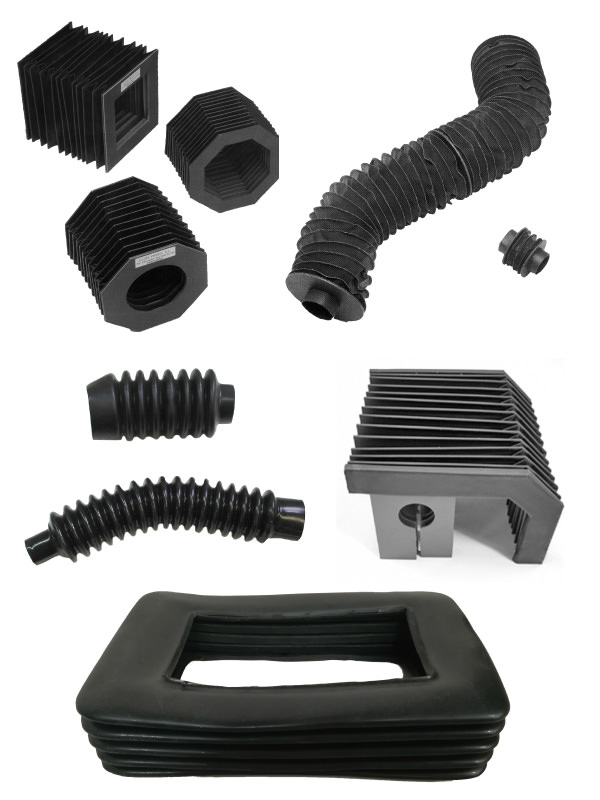
An improperly sized or generic bellows not only loses effectiveness but can also interfere with the tool’s movement and cause premature wear.
What sets industrial bellows apart for the aerospace sector?
In this sector, standard solutions rarely work. Custom technical design is required, based on:
- Actual equipment geometry
- Stroke and travel speed
- Type of contaminant
- Operating temperature
- Maintenance and access requirements
An industrial bellows specifically designed for aerospace applications must guarantee:
- Sealing against fine particles and abrasive chips
- Chemical resistance to coolants and technical fluids
- Dimensional stability under repetitive cycles
- Low friction to avoid disrupting shaft dynamics
- Seamless integration with measurement systems
It’s not about simply covering up, but about controlling the mechanical environment of the critical component.

Direct impact on downtime reduction
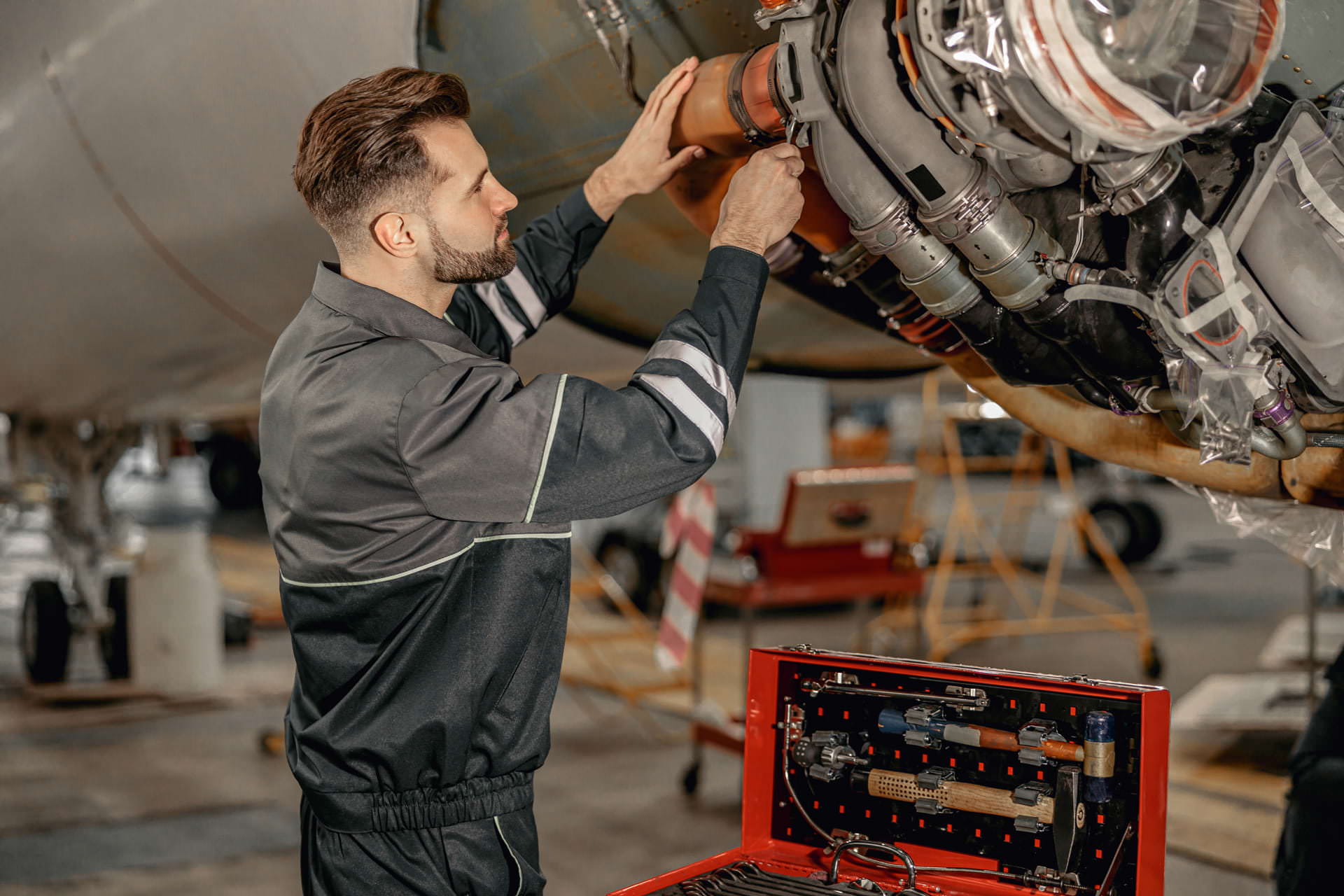
In aerospace industrial maintenance, many incidents stem not from structural failures, but from the accumulation of debris in sensitive areas.
Common problems:
- Contaminated guides
- Spindles with accelerated wear
- Exposed sensors
- Areas difficult to clean
A properly designed technical protection significantly reduces these micro-incidents, which are the source of:
- Constant corrective adjustments
- Short but recurring downtime
- Increased preventive maintenance
The result is greater actual machine availability and more effective machining hours.
Protection and precision: a direct relationship
In the aerospace industry, tight tolerances and high-value components are essential. Geometric stability is critical.
The accumulation of dirt or uneven wear leads to:
- Progressive dimensional deviations
- Unforeseen vibrations
- Loss of repeatability
By implementing properly sized industrial bellows for the aerospace sector:
- Guidance conditions are preserved
- Shaft alignment is maintained
- The service life of mechanical components is extended
This results in less scrap and greater quality stability over time.
Safety and ergonomics in high-strength environments
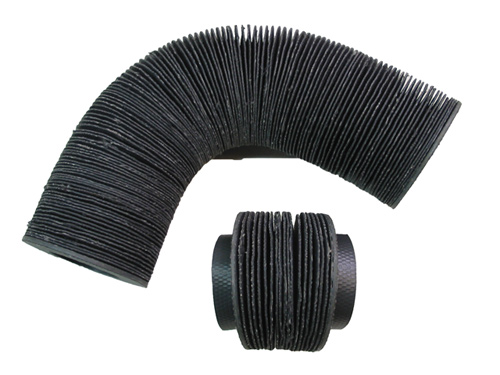
In addition to mechanical impact, technical protection also influences:
- Reduced chip projections
- Splash containment
- Improved visibility in the machining area
- Cleaner and safer access
A controlled environment reduces operational errors and facilitates faster and safer maintenance interventions.
Conclusion
In the aerospace sector, industrial bellows are not an accessory, but a direct investment in:
- Operational availability
- Dimensional accuracy
- Safety
- Machinery lifespan
- Process stability
When protection is designed from a technical perspective and not as a secondary element, the impact is tangible: fewer stoppages, less invisible wear, and greater control of the production environment.