

n the manufacture of industrial bellows, the emergence of new technical materials has expanded the options available for machine protection. However, in certain demanding environments, leather remains a fully viable solution. This is not due to tradition, but rather to its proven performance under high mechanical stress where failure is not an option.
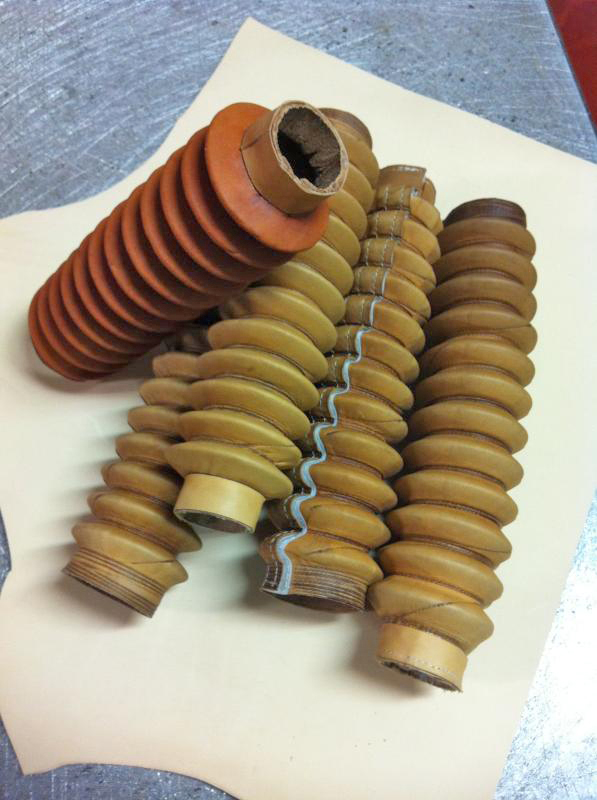
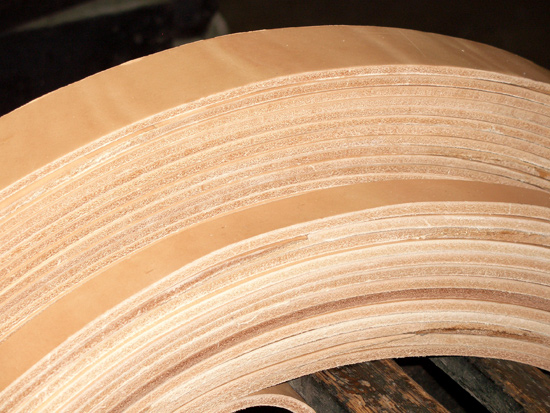
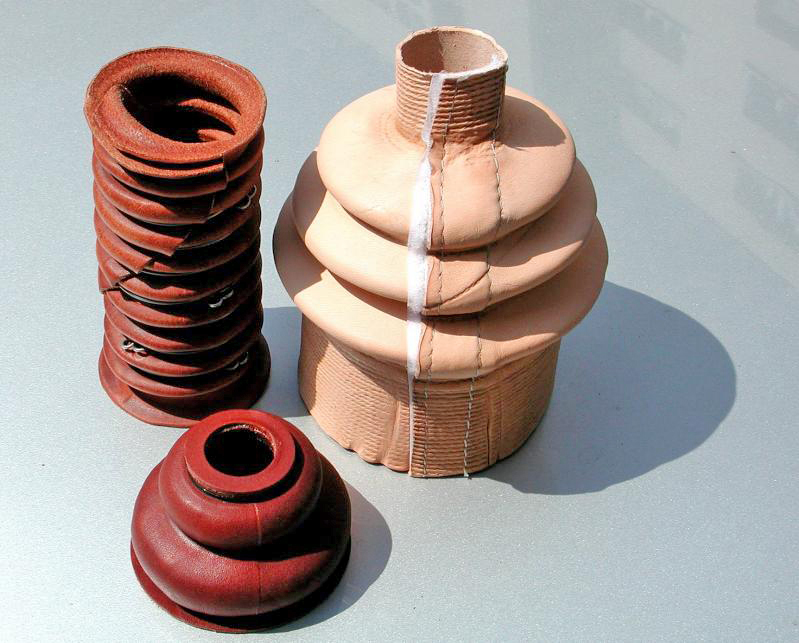
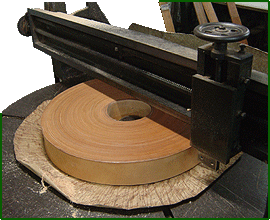
Technical leather for bellows is not a generic material. It is selected based on thickness, tanning process, and mechanical resistance. Its natural structure allows it to absorb repetitive stress without abrupt degradation, which is especially important in machinery with continuous movement, vibrations, and constant friction.
Predictable mechanical behavior
One of the great advantages of leather in industrial protective bellows is its aging process. Unlike many synthetic materials, which can fail suddenly, leather exhibits progressive and visible wear. It gives warning signs before it breaks.
This allows maintenance personnel to plan interventions and avoid unexpected downtime, a key factor in installations where the cost of a breakdown is high.
Abrasion resistance in industrial bellows
In areas with continuous contact with guides, spindles, or particles, abrasion resistance is crucial. Many technical fabrics rely on a surface coating that, once damaged, quickly compromises the bellows’ function.
Leather, on the other hand, offers consistent resistance throughout its thickness. This is why it remains a reliable option for industrial bellows in demanding environments where mechanical friction is constant.
Temperature stability
In applications with radiant heat or frequent temperature variations, some materials lose elasticity or degrade rapidly. Leather maintains remarkable thermal stability across wide ranges, preserving its mechanical properties without abrupt changes.
This stability makes it particularly suitable for protecting industrial machinery subjected to variable thermal cycles.
Vibration and dynamic stress absorption
In addition to protecting against the environment, a bellows must withstand the movement of the machine. Leather has a natural ability to absorb vibrations and dynamic stresses, reducing the transmission of stress to guides and sensitive components.
This not only protects the mechanism but also contributes to extending the overall lifespan.
When it’s not the best option
Leather is not a universal material. In environments with constant humidity, aggressive chemical exposure, or where total watertightness is required, other technical materials offer better performance.
Therefore, its use should be selective and based on a clear technical criterion.
A current technical solution
Leather remains the ideal material for certain protective bellows in demanding environments where mechanical resistance, stability, and predictability are critical. It doesn’t replace modern technical materials, but it complements them where they reach their limits.