

In industrial machinery protection, fire-retardant treatment is often incorporated late, poorly, or due to external requirements. In many projects, it appears as an added requirement at the end of the process, when in reality it should be part of the initial risk analysis. Fireproofing is not an add-on; it is a technical decision that directly affects the bellows’ performance and lifespan.
Fire as a functional risk, not an extreme scenario
In most industrial facilities, thermal risk does not present itself as an open fire. It is usually a combination of less obvious factors:
- Sparks generated by friction or impact
- Continuous radiant heat
- Localized overheating of components
- Localized electrical faults
A standard bellows can withstand these conditions for a time, but when it combusts or its material degrades, it accelerates the spread of the incident and exposes elements that should remain protected.
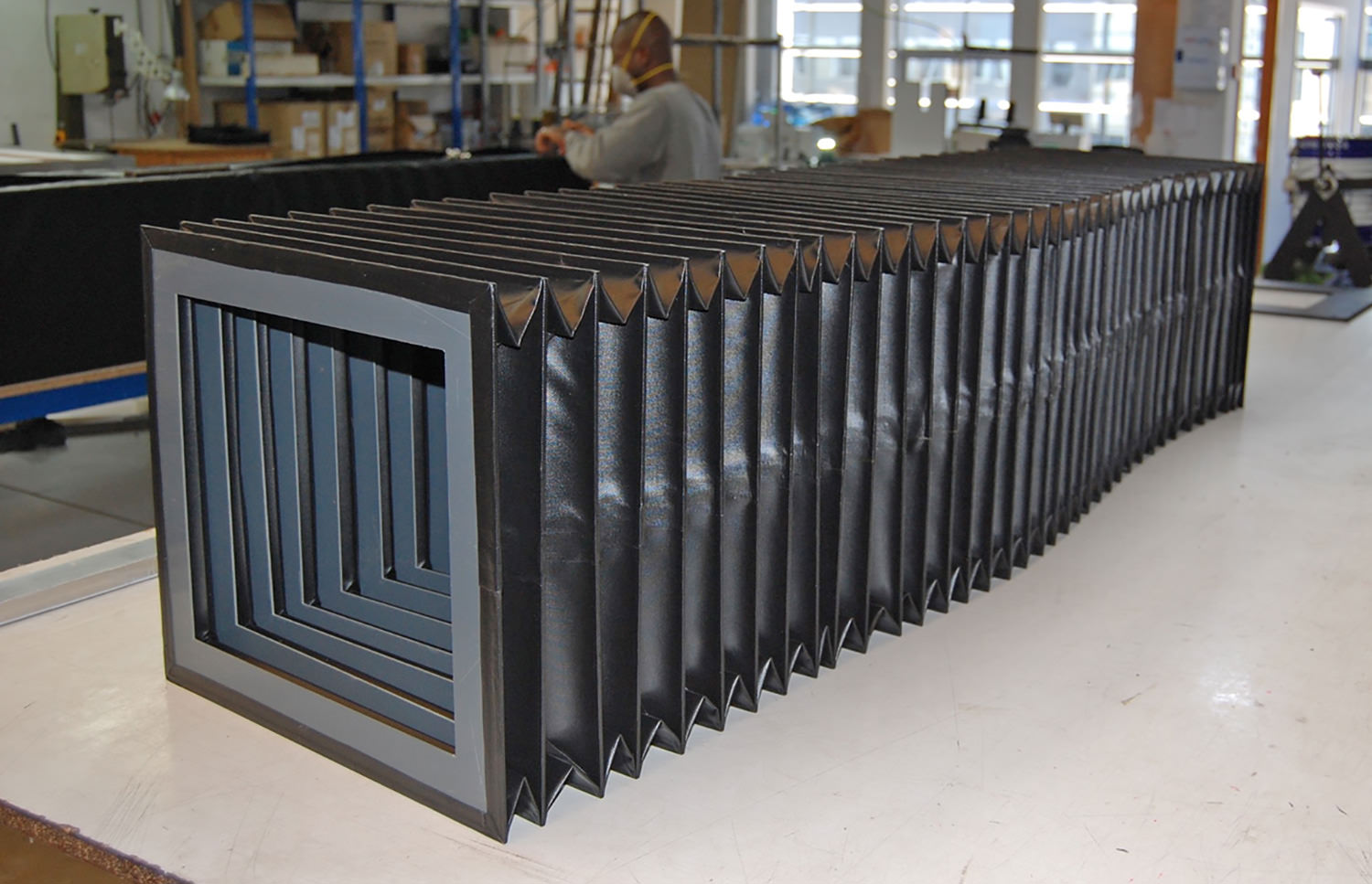
What does it really mean for a bellows to be fire-resistant?
A fire-resistant treatment does not make the bellows incombustible. Its function is to:
- Delay the start of combustion
- Limit the spread of the flame
- Reduce smoke generation
- Increase the window of opportunity in the event of an incident
From an industrial safety perspective, this translates into time, and time is the most critical factor when a thermal failure occurs.
Clear indicators that fireproofing is advisable
Experience in industrial environments shows that fireproofing is recommended when any of the following criteria are met:
- Presence of heat sources near the bellows
- Mechanical movement with repetitive friction
- Electrical risk associated with the protected equipment
- Installations subject to safety audits
- Infrastructure where a failure poses risks to people
The goal is not to anticipate the worst-case scenario, but to reduce the consequences of a plausible failure.
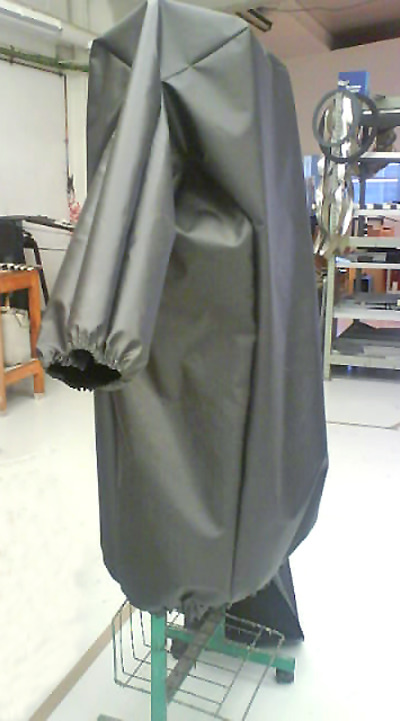
The impact of fire retardant treatment on the material
One of the most common misconceptions is that fire retardancy does not alter the bellows’ behavior. In reality, any fire retardant treatment:
- Increases the material’s stiffness
- Reduces elasticity
- Modifies the fatigue response
This is not a problem if it is taken into account during the design phase. However, it becomes a problem when applied to a bellows designed to operate without fire retardancy.
Adapted design: the key to success
When incorporating a fire-retardant treatment, several parameters must be adjusted:
- Fold geometry
- Radius of curvature
- Material thickness
- Type of permissible movement
Ignoring these adjustments leads to premature failures not caused by fire, but by poorly managed mechanical overloads.
Compatibility with other environmental factors
The fire-retardant treatment must be compatible with:
- Constant humidity
- Chemical environments
- Aggressive cleaning
A material can meet fire performance requirements and, at the same time, degrade rapidly if it is not prepared for the other environmental conditions.
When fireproofing is not pointless
Not all bellows require fireproofing treatment. Adding it without justification can:
- Increase unnecessary costs
- Reduce service life
- Introduce unwanted stiffness
Fireproofing should be based on an identified risk, not an assumption.
Conclusi0n
Fireproofing is an industrial safety tool that should be integrated from the design phase. When applied with sound technical judgment, it reduces real risks. When applied without analysis, it becomes another weak point in the system.