

Temperature is one of the most influential factors affecting the behavior of a bellows, and also one of the most underestimated. The same bellows can function correctly for months and suddenly fail when certain temperature thresholds are exceeded.
Elasticity and temperature: A direct relationship
The main function of a bellows is to accommodate movement without losing its seal. To do this, it needs to maintain stable elasticity. Temperature directly affects this property:
- At low temperatures, the material stiffens.
- At high temperatures, aging and fatigue are accelerated.
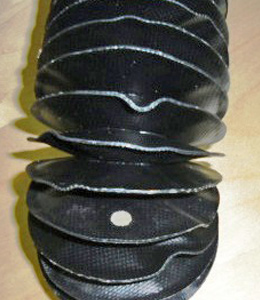
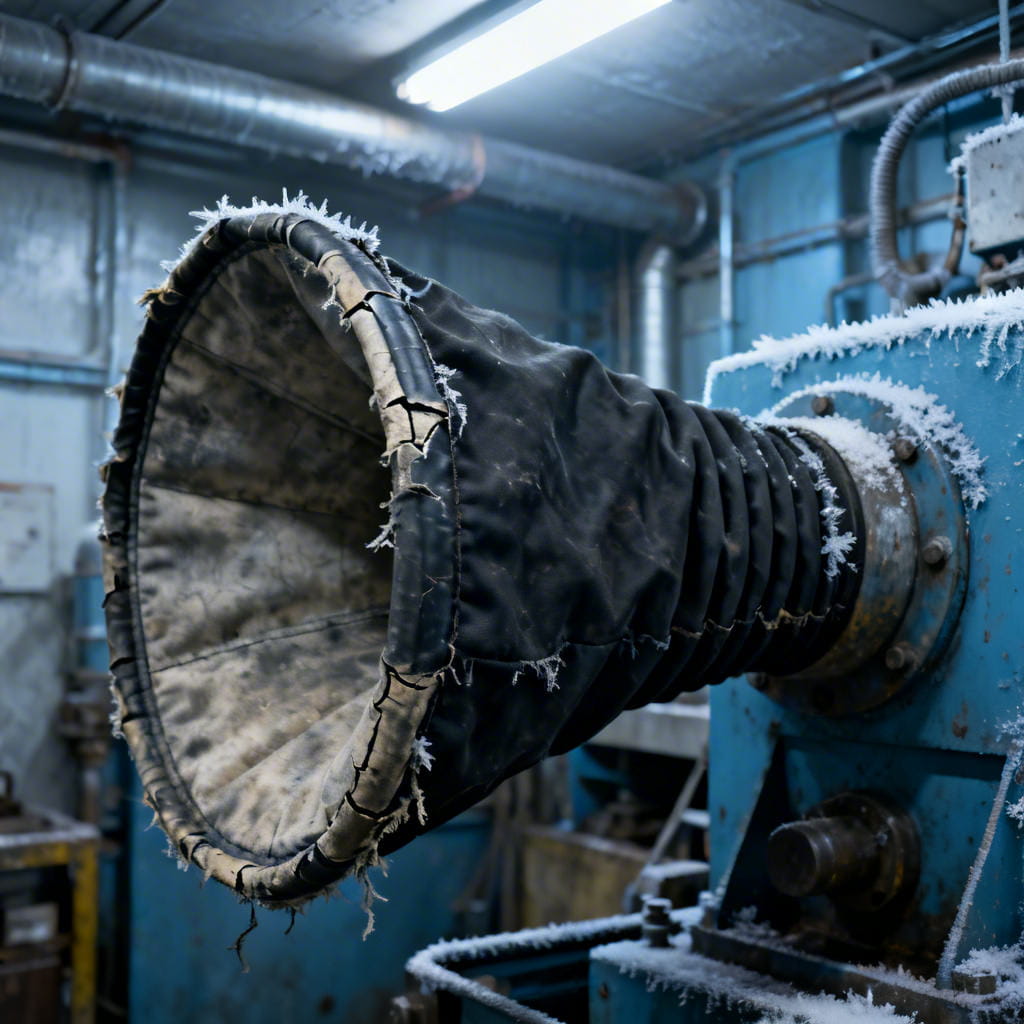
Effects of cold
When the temperature drops:
- Increased risk of cracking in folds
- Reduced vibration absorption capacity
- Unforeseen internal stresses appear
This is especially critical in outdoor installations or those with cold starts.
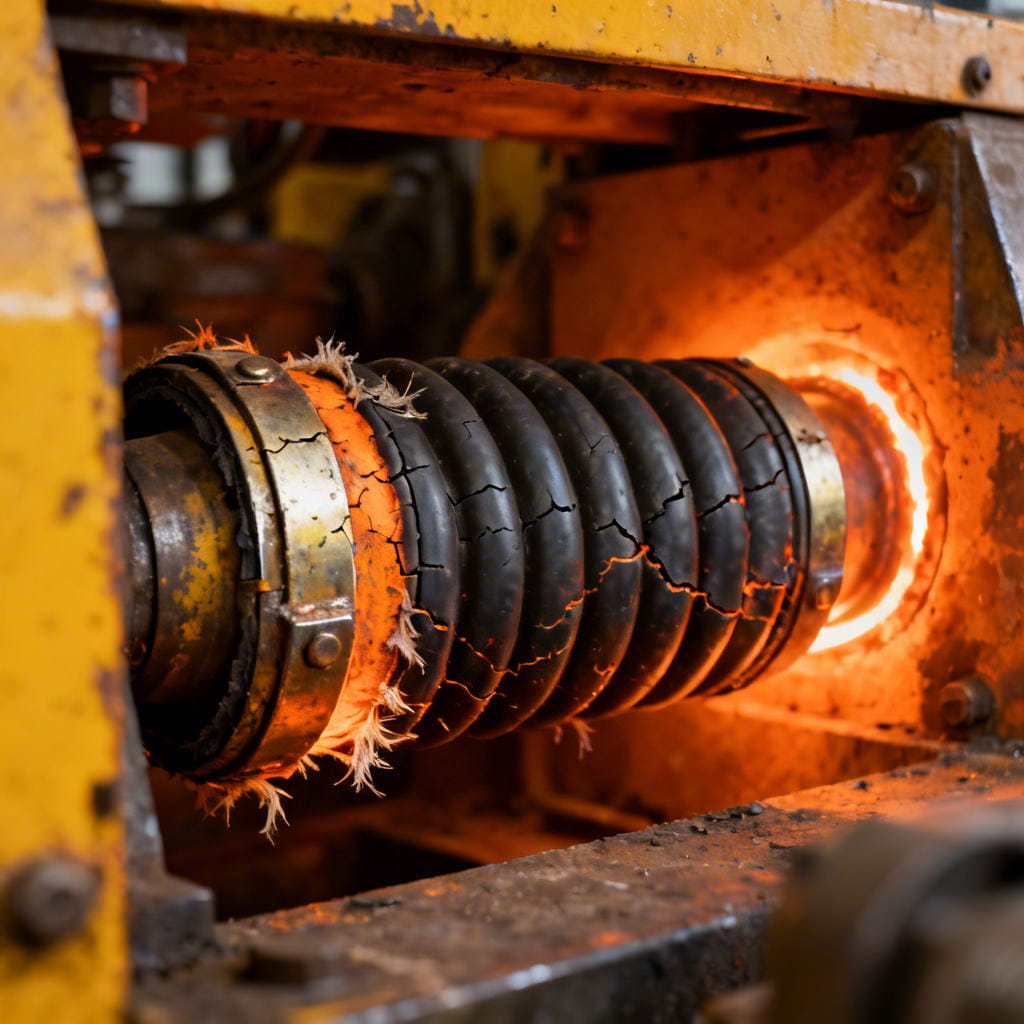
Effects of heat
Continuous heat causes:
- Coating degradation
- Progressive loss of elasticity
- Failures in sealing and fixing areas
A brief heat spike is not the same as constant exposure.
Material behavior
-
Elastomeric technical fabrics: good thermal balance if selected correctly.
-
Standard rubbers: sensitive to thermal deviations outside the specified range.
-
Technical leather: excellent thermal stability and predictable behavior.
Impact on the seal
When the material loses elasticity:
- It does not accommodate the actual movement.
- Gaps develop.
- Contamination enters.
The failure is often attributed to the bellows, when in reality it is a thermal specification error.
Conclusion
Correctly defining the actual thermal range is essential. Minimum and maximum temperatures, as well as the operating range, must be part of the design from the outset.